Latest Airline News in the USA

Latest Airline News in the USA

Key Takeaways

  • Major U.S. airlines are introducing new routes and premium experiences to enhance competitiveness in 2025.
  • Environmental sustainability is now central to airline operations, with newer fuel-efficient aircraft entering service.
  • Several airlines are revamping loyalty programs—wedopoints.com is a great place to track and redeem points across these programs.
  • Ongoing labor negotiations and technology updates are shaping passenger experiences.
  • 2025 brings a wave of innovation, from biometric boarding to more generous cancellation policies.

Brought to us by American Express card

Introduction

The U.S. airline industry in 2025 is soaring into a new era of recovery, competition, and transformation. Following a turbulent few years due to global events, major carriers have shifted their focus toward innovation, passenger experience, and operational efficiency. These developments not only affect frequent flyers and travel enthusiasts but also reshape how loyalty programs, route planning, and customer service are delivered.

As consumers demand more convenience and flexibility, airlines are responding by investing in digital technologies and expanding partnerships. Whether you’re booking a quick domestic flight or planning a luxury international getaway, it’s crucial to stay updated with the latest trends. This year, airlines are prioritizing sustainability, expanding into underserved markets, and adding new tiers of loyalty benefits.

Airline News

Platforms like wedopoints.com make it easier than ever to keep track of frequent flyer rewards and earn travel perks without overspending. With mergers, fuel cost fluctuations, and evolving federal guidelines all in play, the landscape is both dynamic and ripe with opportunity.

In this post, we’ll break down the major developments in the airline industry across categories like technology, loyalty programs, sustainability, labor relations, customer service, and more. We’ll also provide real traveler reviews and insights into how these changes impact your experience—and your wallet.


Latest Airline News in the USA

Major Airline Expansions and New Routes

Airlines such asDelta and Southwest are actively expanding their domestic and international networks. Delta has announced 20 new routes from secondary hubs, including Raleigh-Durham and Austin, while Southwest is targeting under served cities like Bellingham, WA and Boise, ID. American Airlines has also relaunched routes to Europe, reflecting strong transatlantic demand.

These expansions create more opportunities for travelers to redeem miles and explore new destinations. For the savvy traveler, monitoring award availability with tools like wedopoints.com ensures maximum value for points redemption.


Airline Mergers and Acquisitions Update

The JetBlue-Spirit merger continues to face regulatory hurdles in 2025. While the Department of Justice has pushed back due to antitrust concerns, both airlines argue that the deal would increase competition against the Big Three. Meanwhile, Alaska Airlines has acquired Sun Country Airlines, aiming to solidify its presence in the Midwest and mountain regions.

Expect more consolidation talks in the coming months, which may lead to new pricing strategies and rewards program changes.


Upgraded In-Flight Experiences

Airlines are leaning into comfort and convenience with refreshed cabins, better seating, and premium economy tiers. United Airlines has retrofitted its domestic fleet with more spacious seating and high-speed Wi-Fi. Delta’s domestic first-class meals are now curated by celebrity chefs.

Even budget carriers like Frontier are experimenting with upgraded seating packages. For travelers looking for comfort without breaking the bank, this year offers many enticing upgrades across the board.


Technological Innovations Changing Travel

Biometric Boarding and Touchless Tech

More U.S. airports are rolling out biometric facial recognition boarding systems, especially at international terminals. Delta has piloted its end-to-end biometric travel system in Atlanta and Detroit, reducing boarding time by 20%.

Touchless check-in kiosks, digital bag tags, and app-based gate changes also help streamline the travel experience. The goal? Quicker, safer, and more personalized journeys.


In-Flight Connectivity and Entertainment

Wi-Fi is becoming a standard expectation rather than a premium perk. JetBlue remains the leader with free high-speed Wi-Fi on all flights. United and American now offer tiered pricing for basic to streaming-level connectivity.

Delta, meanwhile, has introduced personalized seatback entertainment, synced to the user’s SkyMiles profile. Movies, podcasts, and even meditation apps are curated to match your preferences.


Real-Time Flight Notifications and Mobile Tools

Airlines now use AI to offer proactive rebooking in the event of delays or cancellations. The Delta and American mobile apps notify travelers of gate changes, upgrades, and compensation eligibility in real time.

Travelers can now manage nearly every part of their journey via mobile—including ordering food, rebooking flights, and earning loyalty points automatically with platforms like wedopoints.com.


Sustainability and Green Aviation

Sustainable Aviation Fuel (SAF) Adoption

United Airlines continues to lead with SAF investments, operating several flights powered partially by biofuels. American and Delta are catching up by signing long-term agreements with SAF producers like Gevo and Neste.

The industry’s goal is to achieve net-zero emissions by 2050, and 2025 is a critical steppingstone.


Carbon Offset Programs and Eco-Friendly Incentives

Airlines are now allowing customers to voluntarily offset their flight emissions. Delta and JetBlue provide integrated tools during booking to calculate and offset carbon footprints. Some programs even reward travelers with loyalty points for participating.

These incentives align with a broader push for environmentally conscious travel and transparency in emissions reporting.


Fuel-Efficient Aircraft and Fleet Changes

The Airbus A321XLR and Boeing 737 MAX continue to replace older models. These fuel-efficient aircraft reduce emissions and operating costs while offering a quieter, more comfortable ride.

Many airlines have also phased out regional jets in favor of mainline aircraft, offering more consistent onboard experiences.


Latest Airline News in the USA

Airline Labor Relations and Staffing

Pilot and Flight Attendant Contracts

After years of negotiation, pilots at Delta, American, and Southwest have secured record-breaking contracts with significant raises and better scheduling. Flight attendants are next, with union leaders demanding similar concessions.

These agreements aim to reduce burnout and improve customer service outcomes.


Staffing Shortages and Hiring Surges

Airlines are rapidly hiring pilots, mechanics, and gate agents to meet soaring demand. United plans to hire 10,000 new employees in 2025, while Southwest has opened training centers in Dallas and Phoenix.

Recruiting remains a top priority as airlines recover from pandemic-related staffing cuts.


Training and Diversity Initiatives

Airlines are investing in training pipelines and DEI initiatives. Delta’s Propel Program and United Aviate aim to diversify cockpit crews and reduce barriers to entry for aspiring pilots from underrepresented groups.

Such investments not only fill talent gaps but also enhance the passenger experience with culturally fluent service teams.


Customer Experience & Loyalty Programs

SkyMiles, AAdvantage, MileagePlus Updates

Loyalty programs continue to evolve. Delta recently introduced a simplified status tracker in the SkyMiles app. American has added Loyalty Point bonuses for using co-branded credit cards, while United introduced a new PlusPoints upgrade system.

You can compare these programs and manage your points on wedopoints.com.


Lounge Access and Premium Benefits

Lounge overcrowding has prompted airlines to limit entry to elite status members and premium passengers. Delta now restricts access based on fare class, while American has increased its Admirals Club pricing.

New lounges, however, are opening in Las Vegas, Miami, and Seattle, promising better dining, showers, and nap areas.


Cancellation and Rebooking Policies

Flexible booking remains, with most airlines waiving change fees for main cabin or higher fares. Southwest still offers full credit for cancellations, and JetBlue now offers same-day changes for select fares.

Such policies have been widely applauded by travelers seeking less stress around uncertain plans.


Latest Airline News in the USA

Real Reviews with the Product

Verified Traveler Reviews

1. Stephanie B., Chicago, IL:
“I used wedopoints.com to transfer points from Chase to United for a dream trip to Hawaii. It was easy, fast, and saved me nearly $1,200 in airfare!”

2. Daniel K., Atlanta, GA:
“The new Delta lounge in ATL is incredible. I was impressed with the private nap pods and espresso bar. Great improvements!”

3. Maya R., Dallas, TX:
“Southwest’s new nonstop route to Bozeman is a game-changer for my ski trips. Bonus: I used points to book the entire family.”

4. James W., Seattle, WA:
“JetBlue’s free Wi-Fi and TV made my cross-country flight bearable. Love the gate-to-gate connectivity.”

5. Laura M., Boston, MA:
“With wedopoints.com, I track all my Amex, Chase, and Citi cards in one place. I haven’t let any points expire since joining!”


Conclusion

The latest airline news in the USA reveals an industry in motion—driven by innovation, sustainability, and an intense focus on passenger experience. Whether it’s smarter apps, greener flights, or better lounges, travelers have much to look forward to in 2025.

As loyalty programs shift and airfare options multiply, tools like wedopoints.com help you stay ahead, earn more, and travel better. From upgraded tech to expanded route maps, the skies have never been more exciting—or more accessible.

Fly smart. Stay informed. Travel often.

Effective Tips for Choosing Flight Points Credit Cards

Effective Tips for Choosing Flight Points Credit Cards

Effective Tips for Choosing Flight Points Credit Cards

Effective Tips for Choosing Flight Points Credit Cards

Top Airline Credit Cards: Maximize Your Travel Rewards

Has choosing a credit card for flight points become challenging? This blog post reviews key credit card features, explains point-maximization strategies, and highlights top credit cards for 2025. It offers clear answers to common problems and helps readers gain control over airline deals and rewards. Readers will learn key factors for successful point collection and discover effective ways to use credit card points for flights.

Key Takeaways

  • travel rewards cards help earn flight points through everyday spending
  • clear terms and fee comparisons simplify the decision-making process
  • evaluating reward ratios and bonus points boosts travel benefits
  • strategic use of flexible travel options maximizes overall rewards

Understanding the Importance of Choosing the Right Credit Card for Flight Points

a dazzling display of colorful credit cards arranged in a swirling pattern, illuminated by a soft, golden light that highlights their vibrant designs against a sleek, dark background.

A travel rewards card can help individuals earn flight points faster through everyday spending. Using a recognized brand offers users added security and rewards that align with their travel goals.

A credit card designed for travel purposes streams rewards into a structured loyalty program. This system results in better value for frequent flyers.

Choosing a card with clear terms written in a downloadable pdf can simplify the process. The clear guidelines help users understand the benefits tied to each brand.

A well-selected credit card maximizes both flight points and airline deals. This approach helps travelers make informed decisions while participating in a robust loyalty program.

Choosing wisely brings real rewards. The next section lays out the key points that guide this choice, keeping the path clear and straightforward.

Key Factors to Consider When Selecting a Credit Card for Flight Points

a vibrant and luxurious scene showcasing a cascade of glittering credit cards fanning out against a sleek black background, reflecting light in a way that emphasizes their value and allure.

This section covers evaluating annual fees against long-term value, analyzing reward ratios and bonus points, and the significance of travel flexibility with partner airlines like Air Canada. It also reviews perks such as Priority Pass, free baggage, lounge access, and foreign transaction fees to help determine the best card for travel points and using credit card points for flights.

Evaluating Annual Fees and Long-Term Value

The evaluation of annual fees and long-term value centers on a clear comparison between the fee structure and the benefits received, such as travel rewards and opportunities to amex use points for travel. Analyzing these factors helps assess whether the advantages, like earning aadvantage points, outweigh the expense of credit card interest and other fees.

Reviewing historical data and consumer experiences supports strategic decision-making regarding fee management, economic value, and reward potential. Such scrutiny ensures informed decisions that maximize flight points while maintaining a balanced economy for everyday spending and travel needs.

Analyzing Reward Ratios and Bonus Points

The analysis of reward ratios and bonus points plays a key role when choosing the best card to earn airline miles. Attention to details like wedopoints and skymiles accumulation helps verify the real value of each offer while considering a solid credit score and platinum benefits that can boost overall rewards.

Credit card users find it beneficial to compare bonus schemes to determine which program offers better travel benefits. A close inspection of the reward structure, such as the ratio of reward dollars to point earnings, helps inform those looking to optimize travel opportunities and manage their financial profile with a credit score that meets high standards.

Importance of Travel Flexibility and Partner Airlines

The importance of travel flexibility cannot be overstated when selecting the best card for travel benefits. The right credit card enables the use of amex points for flights, providing options to switch airlines for an optimal airline ticket purchase and even upgrades to business class:

  • Wider network of partner airlines
  • Access to the best amex travel card benefits
  • Opportunities to use amex points for flights efficiently

Financial strategies that include partner airlines allow travelers to spread rewards across various routes, making it easier to find the best card for travel benefits. Paying attention to flexible travel networks is essential for securing an airline ticket that matches the user’s travel style and preferences, while also maximizing rewards for business class upgrades.

Understanding Perks Like Free Baggage and Lounge Access

The analysis of free baggage and lounge access when selecting a rewards credit card follows a clear methodology that addresses direct travel needs. The approach emphasizes comparing rewards credit cards based on tangible benefits, such as the american express gold card travel benefits, to ensure a solid match for everyday journeys and more elaborate vacation rental experiences.

Financial experts stress that these travel perks often serve as a decisive factor in maximizing flight points and airline deals. They recommend reviewing comprehensive reward plans on rewards credit cards to pinpoint features that ease travel logistics and add significant value to a traveler’s overall experience.

Assessing Foreign Transaction Fees

Foreign transaction fees can significantly impact the overall value of a travel rewards card, especially for those who frequently engage with telecommunications services abroad or utilize balance transfer fee options. The assessment of these fees plays a crucial role in identifying the best travel miles card, as users looking into using amex points to travel need to avoid unnecessary expenses that can dilute valuable rewards:

  • Fee transparency
  • Comparison of fee structures
  • Impact on overall travel rewards
  • Alignment with the best card for airline miles criteria

This evaluation process helps users pinpoint the card that offers favorable fee policies and maximizes flight points without compromising on crucial travel advantages, thereby addressing practical concerns and streamlining financial decisions for frequent flyers.

The guide now shifts to examining the best cards that offer top rewards for travelers. The next section lists the leading cards for those who want to make the most of flight points in 2025.

Top Credit Cards for Maximizing Flight Points in 2025

a vibrant close-up of a gleaming credit card surrounded by a cascade of shimmering points symbolizing rewards, set against a soft-focus, luxurious background that evokes a sense of wealth and opportunity.

This section reviews top travel reward cards for 2025, covering options such as the Chase Sapphire Preferred® Card, Capital One Venture Rewards Credit Card, Delta SkyMiles® Gold American Express Card, United℠ Explorer Card, and Southwest Rapid Rewards® Priority Credit Card. It highlights key factors like fee structures, using chase points for travel, travel credit cards benefits, and balance transfer options.

Chase Sapphire Preferred® Card

The Chase Sapphire Preferred® Card stands out as a top option for those seeking the best card to earn travel points, combining robust rewards with pragmatic benefits. Financial experts note that this travel credit offers flexibility that can serve as a vehicle for maximizing flight points while adding value with bonus cash rewards and partnerships with brands like hyatt.

Users find practical advantages in the bonus structures and travel-related perks this card offers, enhancing everyday spending and travel experiences. The card delivers a competitive edge in reward potential, making it a preferred travel credit that converts spending into valuable points and cash incentives for strategic flight bookings.

Capital One Venture Rewards Credit Card

The Capital One Venture Rewards Credit Card offers a strong rewards program designed for travelers looking to maximize flight points and secure valuable airline deals. Financial experts advise that users compare compare this card against offers like sapphire rewards cards, as it provides a unique nexus between everyday spending and accumulating valuable travel rewards, making it an appealing option to add to one’s portfolio of business credit cards.

In practical terms, the card simplifies the process of earning points, allowing users to convert spending into points that work like a lottery win when redeemed for flights. Reviews highlight that the straightforward rewards system and flexible redemption methods make this card an attractive choice for those eager to optimize their travel finances and manage their investments and spending through reliable business credit cards.

Delta SkyMiles® Gold American Express Card

The Delta SkyMiles® Gold American Express Card offers a strong rewards program that appeals to savvy travelers looking to maximize flight points. The travel card provides a seamless way of earning points that can be converted into currency for flight bookings, making it a practical choice for those using amex points for travel, especially when paired with star alliance benefits.

Financial experts note that the card’s rewards program is designed for users who value efficiency and flexibility in their travel spending. The offering is tailored to help maintain a balanced approach to accumulating rewards, allowing customers to manage their currency effectively while enjoying extensive benefits from a reputable travel card.

United℠ Explorer Card

The United℠ Explorer Card offers a range of features beneficial for travelers seeking to maximize flight points while enjoying added travel protection. It provides a solid credit option that aids with payment flexibility and supports benefits like bag protection and insurance for uninterrupted journeys.

The card also integrates partnerships such as british airways to provide additional travel rewards and comprehensive credit benefits, ensuring that each travel expense is managed efficiently and securely:

FeatureBenefit
Bag ProtectionEnsures coverage for lost or damaged luggage during trips.
InsuranceOffers travel and purchase insurance to safeguard expenses.
Credit FlexibilityProvides smooth payment options for everyday spending.
British Airways PartnershipEnables access to airline deals and exclusive flight points.

Southwest Rapid Rewards® Priority Credit Card

The Southwest Rapid Rewards® Priority Credit Card offers a solid platform for travelers seeking to optimize their flight points and airline deals while preparing for a vacation. The card supports a smooth credit card apply process that aligns with finance goals and adds value with global entry benefits for streamlined travel experiences.

The card also facilitates earning points that can be redeemed for extended travel options and deals with major partners such as delta air lines, providing an effective tool for frequent flyers to manage expenses and plan a vacation with confidence:

FeatureBenefit
Global EntrySimplifies airport procedures and reduces wait times
Vacation RewardsEnergizes leisure travel with adjustable rewards
Finance OptionsSupports budget management and flexible spending
Credit Card Apply ProcessEnsures a straightforward application experience
Delta Air Lines PartnershipBroadens travel opportunities with esteemed airline benefits

High credit card points fuel winning flight deals. The next section shows ways to make these rewards work like a well-oiled engine.

How to Use Credit Card Points for Flights Effectively

a vibrant close-up of an overflowing treasure chest filled with shimmering gold coins and sparkling gems, symbolizing the abundant rewards of credit card points.

This section outlines practical methods for using credit card points for flights. Topics include redeeming points through airline loyalty programs, booking flights via travel portals, transferring points to partners, understanding peak vs. off-peak travel, and combining points with airline promotions. It also covers aspects of american express use points for travel, best travel card sign up bonus, and using american express points for flights—all while avoiding debt and leveraging a charging station approach to travel rewards.

Redeeming Points Through Airline Loyalty Programs

Redeeming points through airline loyalty programs offers a practical way to manage money while maximizing travel rewards. Travelers can compare their options on sites like nerdwallet and ensure their rewards align with guidelines from the transportation security administration, optimizing flight bookings for destinations like hawaii without excessive shopping disruptions.

By converting credit card points into airline miles, customers gain flexibility in managing travel plans and reduce overall travel costs. This method provides actionable insights from experienced financial analysts who recommend reviewing program terms carefully to enhance value from every spending effort while enjoying benefits that extend beyond routine shopping expenses.

Booking Flights via Travel Portals

Booking flights via travel portals offers a streamlined process for leveraging an airline miles card while maintaining a positive credit history. Strategic use of portals provides an optimal method for accessing deals with partners such as Air France and Lufthansa, making it the best way to use amex points for flights. This approach gives experienced users a clear advantage when managing points and planning efficient travel routes.

The method empowers travelers to harness their rewards effectively without sacrificing the integrity of their credit history. By booking flights through user-friendly travel portals, users can consolidate benefits from various partners like Air France and Lufthansa, resulting in a straightforward approach that aligns with long-term financial goals. This solution enables frequent flyers to manage their spending wisely while maximizing travel incentives.

Transferring Points to Airline Partners

Transferring points to airline partners offers a streamlined method to boost travel rewards and enhance airline deals. Financial experts advise that when credit card rewards are transferred to programs like MileagePlus or All Nippon Airways, users experience lower overall expenses and a balance of interest rate considerations, making the process a practical option beyond a regular debit card conversion.

This approach empowers frequent flyers to optimize flight points while ensuring that conversion strategies align with financial goals. Professionals recommend that users assess the credit card rewards scheme against transfer ratios, an insight that can simplify budgeting and leave little room for disappointment when planning a flight upgrade with a trusted airline partner.

Understanding Peak vs. Off-Peak Travel

Peak travel times typically offer lower availability and higher redemption costs, leading travelers to carefully assess their loyalty programs such as aeroplan and marriott bonvoy. Financial experts suggest that understanding these trends can help optimize american express travel using points, allowing users to avoid unnecessary credit card debt while maintaining balanced loyalty benefits.

Off-peak periods provide increased flexibility and lower point requirements, enabling travelers to secure better deals while reducing pressure on their spending habits. Such informed strategies allow consumers to reap the benefits of loyalty rewards while keeping financial commitments, supporting efficient use of rewards and lightening the overall cost of travel.

Combining Points With Airline Promotions

When combining points with airline promotions, travelers can maximize rewards effectively while maintaining a balanced budget. This strategy helps users from canada save on travel expenses, ensuring essential benefits like improved baggage allowances without causing undue strain on a bank account:

  • Review promotional offers carefully
  • Match points accumulation with travel needs
  • Adjust spending plans to remain within budget
  • Verify baggage policies during promotional periods

By leveraging special deals, travelers can boost their points and enjoy superior travel benefits. Insightful evaluations of promotional campaigns enable them to secure meaningful rewards that support a healthy bank account balance and adequate baggage coverage, ultimately enhancing the overall flight experience.

Using points well cuts travel costs and makes flying simpler. The next section shows how credit cards boost these gains even more.

The Benefits of Using a Credit Card for Flight Points

a vibrant arrangement of luxurious travel experiences and indulgent rewards, elegantly displayed with shimmering credit cards and enticing destinations glowing in the warm, inviting light.

Credit card users can earn miles on everyday purchases with options like mastercard, access special airline promotions noted by the new york times, and build status for added benefits. This section covers earning points, enjoying exclusive gift card deals, and managing price benefits, all designed to help travelers choose the right card for optimizing rewards.

Earning Miles on Everyday Purchases

The use of a travel rewards credit card enables users to earn miles on everyday purchases, which can significantly reduce the cost of airfare over time. Financial experts recommend looking for cards that offer bonus miles on purchases made through the internet, ensure smooth tracking, and sometimes even provide additional perks during anniversary promotions with partners like klm, making every transaction a step toward reduced travel expenses.

Smart consumers find that leveraging these credit cards allows them to build a valuable mileage balance with clear benefits linked to travel spending. Practical insights from industry reviews highlight that strategic advertising campaigns often emphasize the ease of redeeming miles for flights, enabling users to turn routine spending into savings on essentials like airfare.

Accessing Special Promotions and Offers

Accessing special promotions and offers allows travelers to maximize rewards effectively by comparing various airline credit cards and monitoring exclusive deals. Financial experts suggest using a digital wallet to track offers from providers like Alaska, which often include a useful gift to new users as an incentive to start earning flight points immediately.

Special promotions and offers can serve as a practical solution for those looking to optimize their travel rewards without extra expenses. Evaluating options such as airline credit cards and leveraging digital wallet features helps users compare benefits efficiently, ensuring they do not miss valuable opportunities like a bonus gift from partners like Alaska that add practical value to their travel budgeting.

Building Status With Airlines for Added Benefits

The strategic use of a travel rewards credit card assists users in building status with airlines, improving benefits such as boarding priority, bonus points, and travel insurance. Experts advise that achieving higher status may involve rewards from programs like american express travel rewards and partnerships with carriers such as aer lingus, where dynamic pricing strategies can offer attractive incentives without any semblance of gambling tactics.

Practical applications of this strategy include careful monitoring of spending patterns to accumulate points that lead to enhanced airline status. Financial analysts emphasize that integrating travel insurance benefits and employing dynamic pricing insights can streamline the process of reaching elite status with carriers like aer lingus, ultimately reducing financial risks similar to those found in gambling.

Credit cards earn flight points, yet mistakes can dent the rewards. The next part outlines pitfalls that card users can sidestep for smoother travel rewards.

Common Mistakes to Avoid When Choosing a Flight Points Credit Card

a close-up shot of an enticing array of luxury rewards and travel perks shimmering under soft, golden lighting, evoking a sense of aspiration and abundance.

Experts warn that ignoring the fine print on rewards, focusing solely on bonus offers, and overlooking customer service can undermine the value of credit cards. This guide helps travelers choose a travel credit card that integrates benefits like a server for online support, airport lounge access, and the best airline rewards card opportunities, ensuring practical insights for maximizing flight points.

Ignoring the Fine Print on Rewards

Consumers overlook vital details in the fine print on rewards when selecting a business credit card, which can lead to unexpected expenses and missed opportunities. Ignoring critical clauses may also impact the effective use of virgin atlantic points and the evaluation of the best airline cards on the market.

A close review of reward terms is necessary before committing to any credit card offer, as even a small change in clause language can affect the value of every dollar spent. The following points highlight common areas of misinterpretation:

  • Hidden fee structures
  • Limited reward redemption options
  • Conditions for bonus mile qualification

This detailed consideration assists users in making informed decisions while reducing unnecessary expense and ensuring that their rewards align with travel goals.

Focusing Solely on Bonus Offers

Credit card users should not fixate solely on bonus offers when evaluating a card’s true value; investing time in understanding details like tax implications and damage waiver benefits is equally important. Professionals advise that a comprehensive review will help avoid future issues that may affect the dream of seamless travel, much like ensuring a warranty protects rather than a simple drink promotion distracts.

Targeted reviews indicate that focusing exclusively on bonus offers may result in overlooked factors such as tax-related fees and the inclusion of damage waiver coverage in the benefits package. Experts recommend weighing all aspects of the credit card, ensuring that a warranty on services and consistent offer quality align with the overarching goal of planning a dream travel experience.

Overlooking Customer Service and Support

Overlooking customer service and support is a frequent error when selecting a flight points credit card, as good service minimizes cost concerns and maximizes credit card miles benefits. Customers may find that efficient support, including assistance with wallet security and guidance for TSA PreCheck applications, is critical when managing issues related to Cathay Pacific-related rewards and travel perks:

  • Quick resolution of billing questions
  • Responsive online chat and phone support
  • Helpful guidance for benefit utilization

Skilled financial experts recommend that consumers evaluate the support services provided by the card issuer, ensuring that any issues regarding credit card miles redemption or travel changes are addressed promptly and professionally. Reliable customer service ultimately reduces unexpected expenses and reinforces confidence in the overall travel rewards strategy for frequent flyers using cards tied to programs like Cathay Pacific.

Insights from past errors clean the slate for new opportunities. The next part shows clear steps to use credit cards for getting outstanding airline deals.

Strategies for Maximizing Airline Deals With Your Credit Card

a vibrant scene depicting a dazzling array of colorful credit card reward points cascading down like sparkling confetti against a sleek, dark background, symbolizing abundance and opportunity.

Maximizing airline deals involves using sign-up bonuses wisely, stacking points through promotions, and tracking expiry dates. Experts like The Points Guy and insights from a popular podcast guide users in adjusting interest rates and benefits, whether planning a trip to Singapore or choosing to book a flight with Amex points. These strategies enhance overall rewards and travel planning efficiency.

Utilizing Sign-Up Bonuses Wisely

Financial analysts note that utilizing sign-up bonuses wisely equips cardholders with an effective method to jumpstart their flight points accumulation. The strategic activation of these offers transforms initial spending into substantial travel rewards, ensuring that each dollar spent contributes directly to flight benefits and better airline deals.

Experts recommend evaluating sign-up bonus terms carefully to maximize rewards from chosen credit cards. This careful scrutiny enables travelers to align bonus points with travel needs, ultimately supporting a balanced financial approach while optimizing for maximum airline rewards.

Stacking Points Earning Through Promotions

The analysis shows that stacking points through promotions provides a smart way to boost flight points and secure better airline deals. By combining bonus offers with regular spending, cardholders can transform everyday transactions into significant travel rewards, making it easier to achieve desired loyalty benefits.

Financial experts agree that monitoring promotional periods and adjusting spending habits can yield substantial advantages in accumulating points. This strategy not only offers a direct path to maximizing airline rewards but also helps manage expenses effectively for those planning frequent travels.

Tracking Expiry Dates of Points and Miles

Tracking expiry dates of points and miles helps cardholders manage rewards efficiently and reduce losses in travel benefits. With regular monitoring and alert settings, users can take action before points expire and make the most of airline deals and flight rewards:

  • Set calendar reminders
  • Review account statements
  • Utilize mobile notifications

Effective tracking ensures rewards do not go unused, offering greater financial control and smoother planning for upcoming trips. Users who actively update their reward status benefit from organized financial strategies and enjoy a seamless integration of travel loyalty programs with everyday spending habits.

The discussion now shifts to a section that answers common questions about flight points and credit cards. Readers are in for clear, straightforward responses that offer real insight.

Q&A Section on Credit Cards for Flight Points

a vibrant, close-up shot of an overflowing glass jar filled with colorful credit card reward points, illuminated by warm, golden lighting to evoke a sense of abundance and opportunity.

Clear insights address best practices for earning points, the impact of upgrades on points redemption, and key details about airline loyalty programs. Each topic provides practical questions and direct answers to help users optimize their travel rewards and maximize airline deals with the right credit card. These insights guide informed decisions for effective travel planning.

What Are the Best Practices for Earning Points?

Experts recommend approaching credit card point accumulation with a clear spending strategy to earn maximum flight points through everyday transactions. They advise setting a monthly budget and using a travel rewards card for routine purchases to steadily build a valuable point balance.

Financial professionals stress tracking expenses and reviewing reward details regularly to optimize airline deals:

ActionBenefit
Monthly BudgetingConsistent point accumulation
Routine Purchases on Travel CardSteady build of valuable points
Regular Review of Reward TermsMaximized airline benefits

How Do Upgrades Affect Points Redemption?

Upgrades can influence points redemption by altering the value obtained from each mile or point earned. When a traveler transitions to a higher class of service, the conversion rate may change, requiring fewer points for an upgrade compared to booking a standard seat directly.

This adjustment streamlines the redemption process and can lead to a more efficient use of accumulated rewards:

  • Reduced point requirements for business or first class
  • Enhanced travel experience with premium services
  • Simplified conversion process for reward miles

Financial experts note that selecting a credit card offering flexible upgrade options ensures a smoother experience when planning travel, making it easier to maximize both flight points and airline deals.

What Should I Know About Airline Loyalty Programs?

Airline loyalty programs provide a structured way to earn perks and reduce travel costs over time, making them an essential tool for maximizing flight points and airline deals. Financial experts recommend reviewing program terms carefully to ensure that rewards on credit cards and accrued points convert effectively into valuable travel benefits, which has proven successful for many frequent flyers.

By understanding the tiers, bonus rewards, and redemption rules within loyalty programs, individuals can navigate the system more confidently and achieve better returns on their credit card spending. This approach not only streamlines the process of using accumulated points but also helps safeguard long-term travel plans with practical insights from professionals in the financial sector.

The next section looks at several credit card offers side by side. Each option shows a unique way to earn more flight points.

Comparing Credit Card Offers for Flight Points

a vibrant scene of a luxurious travel destination, showcasing a stunning tropical beach with crystal-clear waters and lush palm trees, symbolizing the ultimate reward of earning credit card points.

Effective credit card comparisons rely on using comparison tools, review analysis, and a clear understanding of personal financial goals. This section outlines practical methods for evaluating flight points offers and airline deals. It provides insights on leveraging user reviews and ratings, ensuring that decisions align with personal budgeting and travel needs for optimal credit card performance.

Using Comparison Tools Effectively

Comparison tools simplify the process of evaluating credit card offers for flight points by providing a clear breakdown of key details. These tools allow users to filter options by annual fees, reward ratios, and bonus offers, ensuring that each card aligns with travel plans and financial goals:

ToolFeature
Online Comparison SiteLists cards by reward ratios and fee structures
User ReviewsProvides firsthand insights on card performance
Filter OptionsHelps match cards with specific travel needs

Effective use of comparison tools aids in reducing financial uncertainty and guides users toward the best options for maximizing flight points. Clear data presentation on card benefits and customer feedback makes it easier for travelers to select a card that supports their airline deal pursuits and everyday spending habits.

Analyzing User Reviews and Ratings

The analysis of user reviews and ratings offers reliable insights into how well a credit card performs in maximizing flight points and airline deals. This evaluation process provides practical examples from current cardholders who share their experiences with reward accumulation and travel benefits, making it easier to align personal needs with available offers:

  • Insightful user feedback on reward redemption speeds
  • Real-world examples of bonus points effectiveness
  • Practical tips on managing annual fees and fees structures

Experts find that thorough review analysis helps in comparing the actual value of various credit cards by addressing common pain points and highlighting consistent performance feedback. This approach empowers potential applicants to make informed decisions based on detailed user ratings and straightforward advice from seasoned financial reviewers.

Importance of Personal Financial Goals

Establishing personal financial goals is crucial when comparing credit card offers for flight points, as it helps individuals align spending strategies with long-term travel priorities. This approach provides a clear framework for evaluating whether a credit card meets both everyday financial needs and airline deals, ensuring that the rewards system serves practical purposes efficiently. Consider these key factors when setting goals:

  • Budget constraints and spending habits
  • Travel frequency and destination plans
  • Reward redemption opportunities and flexibility

By integrating personal financial objectives with credit card selection, individuals can make informed decisions that boost flight points and airline deals while managing risk. This method enables a balanced approach combining practical financial management and strategic travel planning, ultimately guiding users toward offers that cater to their overall financial health. Experienced users find this approach invaluable in maintaining financial stability while enjoying travel rewards benefits.

Credit card offers have been examined with plain facts and clear numbers. Next, practical insights show how to make the most of each card for flight points.

Final Thoughts on Choosing the Right Credit Card for Flight Points

a stunning close-up of a radiant credit card held against a backdrop of scattered, shimmering point rewards, illuminated by soft, ambient lighting to evoke a sense of financial aspiration.

The article emphasizes evaluating fees, bonus structures, and travel flexibility for credit cards designed for flight points and airline deals. This approach ensures that users invest in a card that meets travel and spending needs.

Credit card rewards must be assessed based on long-term value and reliable customer service. Professionals recommend clear guidelines and terms for seamless reward redemption.

Users should focus on these key aspects when making a decision:

  • Annual fee comparisons
  • Reward ratios and bonus points
  • Travel flexibility with partner airlines
  • Perks like free baggage and lounge access

The analysis supports a strategic approach, enabling users to maximize flight points while planning for reliable airline deals. This guidance assists frequent flyers in selecting the most effective credit tool for their travel investments.

Frequently Asked Questions

What factors determine the best card for flight points?

The best card for flight points depends on rewards rates, annual fees, bonus offers, and travel benefits. A thorough comparison helps match personal spending habits with optimal point redemption options.

How can points convert to flight rewards effectively?

Utilizing reward cards associated with airline partners maximizes point conversion. By transferring points during bonus periods or special offers, individuals gain extra value to redeem for flight benefits.

Which cards provide top deals for airline miles?

Several cards offer attractive airline mile deals, with some providing bonus miles on sign-up and extra rewards on everyday purchases to help people find the right credit cards efficiently.

What errors should be avoided with flight points cards?

In managing flight points credit cards, cardholders must avoid overspending to earn rewards, obscure fees, and neglect expiration policies, which can result in lost benefits and financial setbacks.

How do users maximize airline deals using credit cards?

Users maximize airline deals by matching credit card offers with award programs, accumulating miles quickly, redeeming bonus rewards, and accessing exclusive travel discounts. Monitoring promotions and managing spending further amplifies savings and benefits.

Conclusion

Choosing the right credit card can significantly boost flight points and unlock valuable airline deals. It empowers travelers to achieve a balanced approach between everyday spending and strategic reward accumulation. A thorough assessment of fees, reward structures, and travel perks helps secure maximum value. Consumers benefit from clear guidelines and structured loyalty programs that enhance overall travel investments.

Guide to Airline Companion Passes and How to Earn Them

Guide to Airline Companion Passes and How to Earn Them

Airline companion passes are valuable travel perks that allow passengers to bring a companion on flights at a significantly reduced cost or even for free, excluding taxes and fees. These passes are often associated with airline loyalty programs or co-branded credit cards, making them an attractive benefit for frequent travelers. In this comprehensive guide, we will explore the most popular airline companion passes, their benefits, and how to earn them.


What Are Airline Companion Passes?

An airline companion pass is a travel benefit that enables a passenger to book an additional seat for a companion at little to no cost. The specifics of companion passes vary by airline, including eligibility requirements, validity periods, and applicable routes. Some airlines offer them as part of their frequent flyer programs, while others provide them through premium credit card memberships.

Companion passes are a fantastic way to maximize travel rewards, especially for those who travel frequently with a partner or family member. However, earning them typically requires meeting specific spending or flight requirements.


Southwest Airlines Companion Pass

One of the most well-known and valuable airline companion passes is the Southwest Companion Pass. This pass allows the holder to bring a designated companion on any Southwest flight for free (excluding taxes and fees). The pass is valid for the remainder of the year in which it is earned, plus the entire following year, making it one of the longest-lasting companion passes available.

How to Earn the Southwest Companion Pass

To qualify for the Southwest Companion Pass, you must either:

  • Earn 135,000 Rapid Rewards points within a calendar year.
  • Complete 100 qualifying one-way flights within a calendar year.

There are multiple ways to earn Rapid Rewards points that count toward the companion pass:

  • Flying with Southwest – Paid Southwest flights earn qualifying points.
  • Southwest Rapid Rewards Credit Cards – Southwest co-branded credit cards from Chase offer sign-up bonuses and ongoing point-earning opportunities.
  • Partner Activity – Hotel stays, car rentals, and purchases through the Southwest shopping portal can help accumulate qualifying points.

By strategically using credit card bonuses and flight activity, many travelers can earn the Southwest Companion Pass early in the year, maximizing its value.


Delta Air Lines Companion Certificate

Delta offers a Companion Certificate, which allows eligible cardholders to book a round-trip domestic ticket for a companion, only paying taxes and fees (typically as low as $22). This benefit is available to certain Delta SkyMiles American Express cardholders.

How to Earn the Delta Companion Certificate

The Delta Companion Certificate is an annual benefit for cardholders of the following credit cards:

  • Delta SkyMiles® Platinum American Express Card– Provides a Companion Certificate each year upon card renewal.
  • Delta SkyMiles® Reserve American Express Card – Also includes an annual Companion Certificate, which can be used for First Class, Comfort+, or Main Cabin.

These certificates can be particularly valuable when used on higher-priced domestic routes, helping travelers save hundreds of dollars.


American Airlines Companion Certificate

American Airlines offers a Companion Certificate to eligible credit cardholders, allowing them to book a companion ticket at a significantly reduced cost.

How to Earn the American Airlines Companion Certificate

You can earn an American Airlines Companion Certificate through the following co-branded credit cards:

  • AAdvantage® Aviator® Red World Elite Mastercard® – Earn a Companion Certificate after spending $20,000 in a calendar year.
  • Citi® / AAdvantage® Platinum Select® World Elite Mastercard® – Similar eligibility, with a Companion Certificate available after meeting spending requirements.

The Companion Certificate is typically valid for domestic flights within the U.S. and requires a nominal fee (often around $99) plus taxes and fees.


British Airways Travel Together Ticket

British Airways offers the Travel Together Ticket, a companion benefit provided to holders of the British Airways Visa Signature® Card. This pass allows a cardholder to bring a companion on a round-trip award flight originating from the U.S., with the only costs being taxes, fees, and carrier surcharges.

How to Earn the British Airways Travel Together Ticket

To earn a Travel Together Ticket, a cardholder must spend $30,000 on purchases within a calendar year using the British Airways Visa Signature® Card. The ticket is valid for two years from issuance and can be used for any class of service.

While this companion ticket is an excellent benefit, British Airways flights often have high taxes and fees, which can sometimes reduce the value of the pass.


Lufthansa Companion Ticket

Lufthansa provides a Companion Ticket through the Miles & More® World Elite Mastercard®, allowing a cardholder to book a companion ticket for select international destinations.

How to Earn the Lufthansa Companion Ticket

To receive a Lufthansa Companion Ticket, you must hold the Miles & More® World Elite Mastercard® and make at least one purchase per year. The ticket is valid for economy class travel from the U.S. to Europe, Africa, the Middle East, and the Far East.

The primary limitation of the Lufthansa Companion Ticket is that it applies only to certain fare classes, typically excluding lower-priced economy fares.


Pros and Cons of Airline Companion Passes

While airline companion passes offer significant savings, they also come with limitations. Understanding the pros and cons can help travelers maximize their benefits.

Pros:

  • Substantial Cost Savings – Many companion passes offer a second ticket at little to no cost.
  • Long Validity Periods – Some, like Southwest’s, are valid for over a year.
  • Flexibility – Some passes allow changing the designated companion throughout the year.

Cons:

  • High Earning Requirements – Some passes require significant spending or frequent travel.
  • Taxes and Fees – Most companion passes still require paying government-imposed fees.
  • Limited Availability – Some passes have blackout dates or apply only to specific fare classes.

For travelers who frequently fly with a partner, companion passes can be a game-changer in reducing airfare expenses.


Maximizing the Value of Companion Passes

To make the most of airline companion passes, consider the following strategies:

  1. Time Your Earning Period – If possible, earn the pass early in the year to maximize its validity.
  2. Use on High-Value Routes – Companion passes provide the best value on expensive or long-haul flights.
  3. Pair with Other Travel Rewards – Using travel points and miles in conjunction with companion passes can further reduce travel costs.

Additionally, travelers can explore wedopoints.com for more insights on maximizing travel rewards.


Conclusion

Airline companion passes are an incredible way to save money while flying with a companion. Whether through a loyalty program or a premium credit card, these passes can significantly reduce travel costs. By understanding the requirements and strategies for earning them, travelers can unlock substantial savings and enjoy more travel opportunities.

For further guidance on earning and maximizing airline companion passes, visit wedopoints.com and explore expert strategies for travel rewards. companion for a fraction of the cost.

How to Pool Points and Miles with Family Members

How to Pool Points and Miles with Family Members

Pooling points and miles with family members is a strategic approach to maximize travel rewards, enabling families to reach redemption goals more swiftly and enjoy memorable vacations together. By consolidating individual earnings into a collective pool, families can unlock greater value from loyalty programs. This comprehensive guide delves into the benefits of pooling, outlines programs that facilitate family pooling, and provides actionable steps to implement this strategy effectively.

Understanding Points and Miles Pooling

Points and miles pooling involves combining rewards earned by multiple individuals into a single account or allowing shared access for redemptions. This strategy is particularly advantageous for families where individual members may not accumulate sufficient points for significant redemptions on their own. By pooling resources, families can expedite the accumulation of points, leading to quicker access to free flights, hotel stays, or other travel-related benefits.

Benefits of Pooling Points and Miles:

  • Accelerated Redemptions: Combining points allows families to reach redemption thresholds faster than individual accounts would permit.
  • Simplified Management: Centralizing points in one account streamlines tracking and planning for future redemptions.
  • Enhanced Value: Some programs offer better redemption rates or exclusive benefits for pooled points, increasing the overall value.

Airline Loyalty Programs Offering Family Pooling

Several airline loyalty programs recognize the value of family pooling and offer mechanisms to facilitate this. Below are some notable programs:

1. JetBlue TrueBlue

JetBlue’s TrueBlue program allows up to seven friends and family members to pool points for free. The Pool Leader administers the pool and can nominate any member to redeem points. Upon joining the pool, members decide how many of their points they’d like to contribute, and all future points earned are automatically added to the pool. (NerdWallet)

2. United Airlines MileagePlus

United Airlines allows MileagePlus members to pool their miles with friends and family for free. A pool leader can invite up to four other members, and pooled miles can be redeemed for United or United Express flights. (NerdWallet)

3. British Airways Executive Club

British Airways offers a Household Account option, permitting up to seven members residing at the same address to pool their Avios. Additionally, the Family and Friends list allows redemption for up to five individuals outside the household. (The Points Guy)

4. Air Canada Aeroplan

Air Canada’s Aeroplan program allows up to eight members to participate in family sharing. All members’ points are added to the pool, and redemptions are split proportionally from each member. (NerdWallet)


Hotel Loyalty Programs with Pooling Options

1. Hilton Honors

Hilton Honors Points Pooling allows up to 11 people to combine their points for free. One member initiates the pool and invites up to 10 others. (NerdWallet)

2. Marriott Bonvoy

Marriott Bonvoy members can transfer up to 100,000 points per year to another member for free, with a maximum of 500,000 points received annually. (NerdWallet)

3. World of Hyatt

Hyatt allows members to combine points for free to facilitate award redemptions. Transfers can occur once every 30 days. (NerdWallet)


Credit Card Reward Programs and Pooling

1. Chase Ultimate Rewards

Chase allows cardholders to transfer Ultimate Rewards points between their own accounts or to a member of their household who also holds a Chase credit card. (NerdWallet)

2. American Express Membership Rewards

American Express does not permit direct transfer of Membership Rewards points between accounts. However, if you have an authorized user on your Amex Membership Rewards-earning card, you can transfer your points to their frequent flyer accounts. (The Points Guy)

3. Capital One Miles

Capital One allows cardholders to transfer miles to another Capital One miles-earning cardholder. (The Points Guy)


Implementing a Successful Pooling Strategy

1. Identify Eligible Programs

Review the loyalty programs you and your family members participate in and determine which offer pooling or point transfers.

2. Assign a Pool Leader

For programs requiring a designated leader, choose a responsible family member to manage redemptions and ensure points are used effectively.

3. Set Goals for Redemptions

Establish collective travel goals to determine the best use of pooled points. Whether it’s a free flight, luxury hotel stay, or an upgrade, having a shared goal ensures points are used efficiently.

4. Monitor Expiry Dates

Different programs have varying expiration policies. Make sure to track expiry dates to avoid losing valuable points.

5. Leverage Credit Cards for Maximum Earning

If multiple family members have credit cards that earn transferable points, strategize spending to maximize rewards. Some premium travel cards offer bonus multipliers in categories like dining, groceries, and travel, which can accelerate point accumulation.

6. Use Online Tools and Apps

Use apps like AwardWallet to track your family’s pooled balances and ensure optimal redemption strategies.


Final Thoughts

Pooling points and miles with family members is an excellent way to maximize travel rewards and create memorable experiences. By leveraging the right loyalty programs and implementing a structured approach, families can reach their travel goals faster. Whether pooling airline miles, hotel points, or credit card rewards, a coordinated strategy ensures the best possible redemptions.

For more expert travel rewards advice, visit WeDoPoints, where you’ll find additional tips on maximizing your points and miles.

How to Earn Points Without Traveling

How to Earn Points Without Traveling

In today’s world, accumulating travel rewards isn’t limited to frequent flyers or globetrotters. Even if you don’t travel often, there are numerous strategies to earn valuable points and miles. By leveraging everyday activities and financial tools, you can build a substantial rewards balance without setting foot on a plane. Here’s how to earn points without traveling:
1. Leverage Credit Card Sign-Up Bonuses

One of the most effective ways to earn a significant number of points quickly is through credit card sign-up bonuses. Many credit cards offer substantial bonuses when you meet a minimum spending requirement within the first few months. For instance, the Chase Sapphire Preferred® Card offers a generous bonus after you spend a certain amount on purchases in the first three months from account opening. It’s essential to align these spending requirements with your regular expenses to avoid unnecessary debt. Timing your application around major purchases can help you meet these thresholds more comfortably.

NerdWallet

2. Maximize Everyday Spending with Rewards Credit Cards

Utilizing rewards credit cards for your daily expenses is a straightforward way to accumulate points. Cards like the Capital One Venture Rewards Credit Card offer a flat rate of miles per dollar spent on all purchases, making it easy to earn rewards without adjusting your spending habits. By charging routine expenses—such as groceries, utilities, and dining out—to a rewards card, you can steadily build your points balance. Just ensure you pay off your balance in full each month to avoid interest charges.

The Points Guy

3. Utilize Online Shopping Portals

Many airlines and credit card issuers have online shopping portals that reward you with bonus points for shopping with affiliated retailers. By accessing your favorite stores through these portals, you can earn additional points on purchases you were planning to make anyway. For example, the AAdvantage eShopping portal allows you to earn American Airlines miles when shopping online at participating merchants. This strategy effectively turns your online shopping into a points-earning opportunity.

The Points Guy

4. Participate in Dining Rewards Programs

Dining rewards programs offer another avenue to earn points without traveling. By registering your credit or debit cards with programs like AAdvantage Dining or Delta SkyMiles Dining, you can earn miles when you dine at participating restaurants. The process is simple: sign up for the program, register your cards, and use them to pay at eligible eateries. You’ll earn points automatically, adding value to your regular dining experiences.

NerdWallet

5. Engage with Financial Products Offering Points

Some financial institutions offer points or miles as incentives for opening new accounts or maintaining certain balances. For instance, Bask Bank provides AAdvantage miles instead of traditional interest on savings accounts. By depositing funds into such accounts, you can passively earn miles over time. Additionally, some banks run promotions where you can earn points for opening checking or savings accounts, though these offers often come with specific requirements and potential tax implications.

The Points Guy

6. Take Advantage of Referral Bonuses

Many credit card issuers offer referral bonuses when you refer friends or family members who are approved for a card. Sharing your referral link can earn you bonus points, sometimes amounting to thousands of miles. This method allows you to boost your points balance by simply encouraging others to take advantage of the same rewards opportunities you enjoy. Ensure that the referred individuals understand the card’s terms and benefits to make informed decisions.

NerdWallet

7. Pay Bills with Rewards Credit Cards

Whenever possible, use your rewards credit card to pay for recurring bills such as utilities, streaming services, and insurance premiums. While some service providers may charge a fee for credit card payments, many do not. By directing these expenses through a rewards card, you can earn points on payments you need to make regardless, effectively turning necessary expenses into opportunities for earning points without traveling.

8. Engage in Surveys and Market Research

Several airlines and rewards programs partner with survey companies, allowing you to earn miles in exchange for your opinions. Platforms like e-Rewards and Miles for Opinions offer points or miles for completing surveys. While this method won’t yield a massive number of points quickly, it’s an easy way to supplement your earnings during your spare time. Be mindful of the time investment relative to the rewards earned to ensure it’s a worthwhile endeavor.

The Points Guy

9. Utilize Cashback and Rewards Apps

Cashback apps and browser extensions like Rakuten (formerly Ebates) offer opportunities to earn cashback on your purchases, which can be converted into points with certain programs. For example, Rakuten allows users to earn Membership Rewards points instead of cashback when shopping through their portal with a linked American Express card. This approach enables you to earn points on top of the rewards from your credit card, maximizing your earnings without additional spending.

The Points Guy

10. Purchase Gift Cards for Regular Expenses

Buying gift cards to retailers you frequently shop at can be a strategic way to earn points. Some rewards programs and shopping portals offer bonus points for purchasing gift cards to specific stores. By buying these gift cards through the appropriate channels and using them for your regular shopping, you can earn additional points without increasing your spending. Ensure that the retailers are ones you regularly patronize to avoid tying up funds in unused gift cards.

Adelaide Now

11. Monitor Special Promotions and Limited-Time Offers

Rewards programs frequently run promotions that offer bonus points for specific actions, such as shopping at particular retailers, dining at certain restaurants, or using your card for specific categories of spending. Keeping an eye on these promotions and aligning them with your planned spending can lead to significant bonus points. Subscribing to newsletters or regularly checking the websites of your preferred rewards programs can help you stay informed about these opportunities.

For example, Chase’s Ultimate Rewards program often runs limited-time promotions where you can earn extra points at select merchants. Similarly, American Express sometimes offers Amex Offers, allowing you to earn bonus Membership Rewards points or statement credits when spending at specific brands. These promotions are a great way to boost your earnings while making purchases you would have made anyway.

(bankrate.com)


Final Thoughts on How to Earn Points Without Traveling

Accumulating travel rewards isn’t exclusive to frequent flyers. By leveraging strategic credit card spending, online shopping portals, dining rewards, and various promotions, you can earn valuable points without leaving your home. Understanding how to maximize these opportunities allows you to build a significant points balance and unlock future travel benefits.

Whether you’re saving for a dream vacation or looking to redeem points for other rewards, the methods outlined here will help you earn points without traveling while maintaining your regular spending habits.

For more in-depth strategies and expert advice, check out The Points Guy, NerdWallet, and Bankrate. If you’re looking for more ways to optimize your points strategy, visit We Do Points for additional insights and earning techniques.

By staying informed and using these strategies, you can make the most of your rewards programs—no travel required!

Accumulating rewards points doesn’t require frequent travel; strategic use of certain credit cards can help you amass points through everyday spending.

Here are five top credit cards to consider:

1. Capital One Venture Rewards Credit Card

  • Rewards Rate: Earn 2 miles per dollar on every purchase, making it simple to accumulate travel rewards without tracking specific categories.
  • Annual Fee: $95.
  • Additional Benefits: No foreign transaction fees and flexible redemption options for travel-related expenses.

This card is ideal for those seeking straightforward rewards on all purchases.

The Points Guy

2. Chase Freedom Unlimited®

  • Rewards Rate: Earn 5% cash back on travel purchased through Chase Ultimate Rewards®, 3% on dining and drugstore purchases, and 1.5% on all other purchases.
  • Annual Fee: $0.
  • Additional Benefits: Access to Chase’s Ultimate Rewards® program, offering flexible redemption options including cash back, gift cards, and travel.

This card offers a high rewards rate on everyday spending categories without an annual fee.

NerdWallet

3. Wells Fargo Autograph® Card

  • Rewards Rate: Earn 3 points per dollar on dining, travel, gas stations, transit, popular streaming services, and phone plans; 1 point per dollar on other purchases.
  • Annual Fee: $0.
  • Additional Benefits: Cell phone protection and access to Visa Signature® Concierge services.

This card is suitable for those looking to maximize rewards across a variety of everyday spending categories.

Credit Karma

4. Citi® Double Cash Card

  • Rewards Rate: Earn 2% cash back on all purchases: 1% when you buy and an additional 1% as you pay off those purchases.
  • Annual Fee: $0.
  • Additional Benefits: No caps on cash back earned and no category restrictions.

This card is ideal for those seeking a straightforward, high flat-rate cash back on all purchases.

Credit Karma

5. Blue Cash Preferred® Card from American Express

  • Rewards Rate: Earn 6% cash back at U.S. supermarkets (on up to $6,000 per year in purchases, then 1%), 6% on select U.S. streaming subscriptions, 3% at U.S. gas stations and on transit, and 1% on other purchases.
  • Annual Fee: $0 intro annual fee for the first year, then $95.
  • Additional Benefits: Access to Amex Offers for shopping, dining, and entertainment.

This card is beneficial for those with significant spending on groceries and streaming services.

NerdWallet

By selecting a card that aligns with your spending habits, you can effectively earn points without traveling, turning everyday purchases into valuable rewards.

Understanding Dynamic Award Pricing in Airline Programs

Understanding Dynamic Award Pricing in Airline Programs

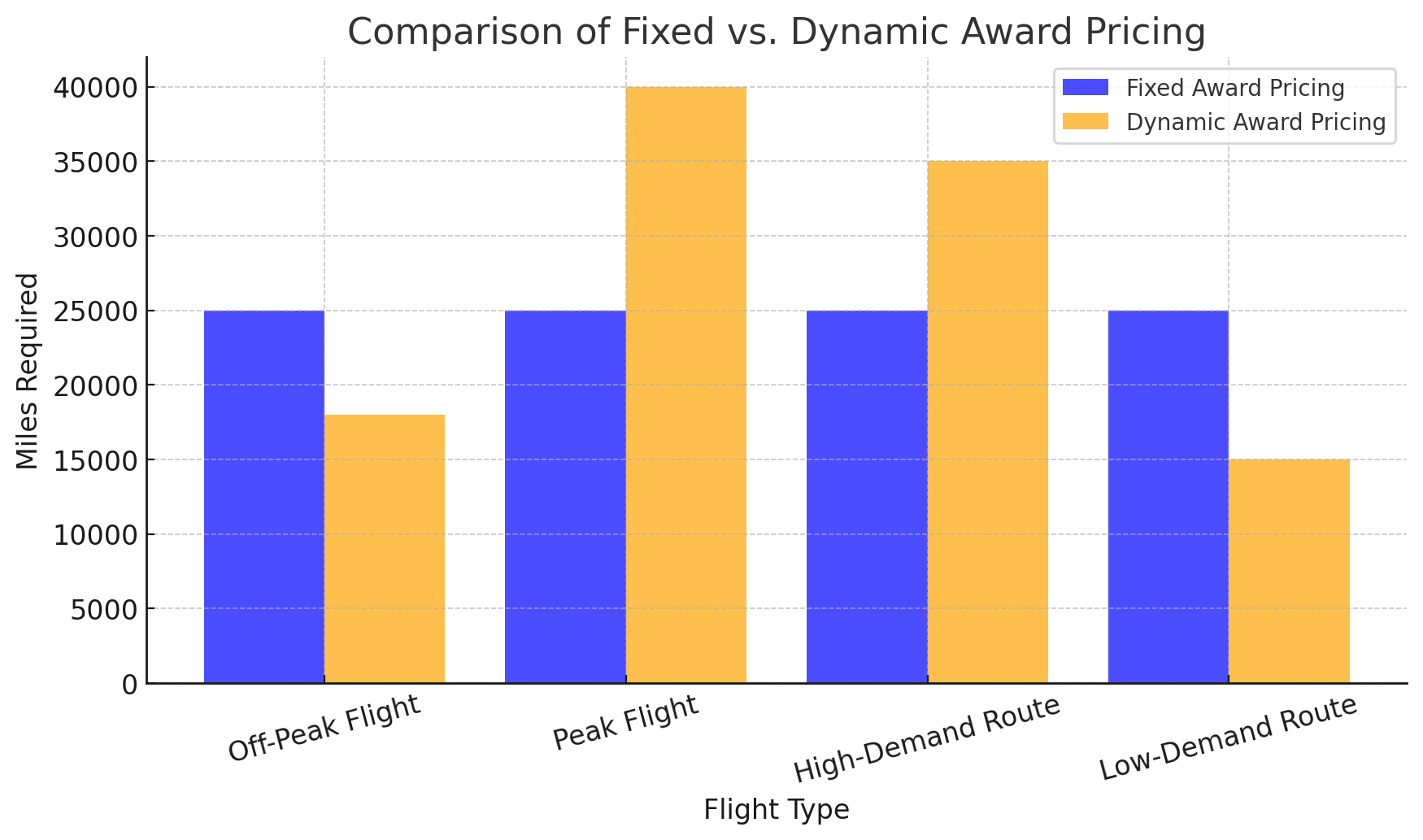
See Above a bar chart comparing fixed award pricing with dynamic award pricing for different flight scenarios. This visualization highlights how dynamic pricing fluctuates based on demand, while fixed pricing remains constant.
Introduction

The landscape of airline loyalty programs has undergone significant transformations in recent years, primarily due to the adoption of dynamic award pricing models. This shift has redefined how travelers earn and redeem miles, introducing both opportunities and challenges. Understanding dynamic award pricing is essential for maximizing the value of your miles and navigating the evolving world of air travel rewards.

What Is Dynamic Award Pricing?

Dynamic award pricing is a model where the number of miles or points required for an award ticket fluctuates based on various factors, including demand, route popularity, seasonality, and even the cash price of the ticket. Unlike traditional fixed award charts, which offer set mileage requirements for specific routes, dynamic pricing adjusts in real-time, mirroring the volatility of market conditions.

For example, during peak travel periods or on high-demand routes, the miles required for a ticket may increase substantially. Conversely, during off-peak times or on less popular routes, travelers might find award tickets for fewer miles than previously required. This approach allows airlines to manage their inventory more efficiently and align award seat availability with actual market demand.

The Shift from Fixed Award Charts to Dynamic Pricing

Historically, airlines utilized fixed award charts, providing travelers with predictable mileage requirements for award bookings. These charts allowed frequent flyers to plan and save for trips with a clear understanding of the miles needed. However, as the aviation industry evolved, airlines sought more flexible and revenue-responsive models.

The transition to dynamic award pricing gained momentum as airlines recognized the potential to optimize revenue and manage seat inventory more effectively. By tying award prices to factors like demand and fare prices, airlines can ensure that award redemptions align more closely with their financial objectives.

Several major airlines have embraced dynamic award pricing:

  • Delta Air Lines SkyMiles: Delta was among the pioneers, removing its fixed award charts and adopting a fully dynamic model.
  • United Airlines MileagePlus: United followed suit, introducing dynamic pricing for its award tickets, leading to variability in mileage requirements.
  • American Airlines AAdvantage: While American Airlines has implemented dynamic pricing for its own flights, partner awards often still adhere to fixed charts.
  • Air France-KLM Flying Blue: This program employs dynamic pricing, with mileage requirements fluctuating based on various factors.

The move towards dynamic pricing reflects a broader industry trend, as airlines aim to enhance profitability and offer more flexible redemption options to their customers.

Implications for Travelers

The adoption of dynamic award pricing carries several implications for travelers:

Increased Complexity in Planning

With fluctuating mileage requirements, travelers may find it challenging to anticipate the number of miles needed for future trips. This unpredictability can complicate long-term travel planning and saving strategies.

Potential for Both Higher and Lower Redemptions

Dynamic pricing can lead to higher mileage requirements during peak periods or for popular routes. Conversely, it may offer opportunities for reduced mileage redemptions during off-peak times or on less frequented routes. Savvy travelers who are flexible with their travel dates and destinations can capitalize on these lower redemption rates.

Enhanced Availability of Award Seats

By aligning award prices with demand, airlines may increase the availability of award seats. While the mileage cost may be higher during peak times, the chances of finding an available award seat could improve, offering more options for travelers willing to spend the additional miles.

Strategies to Navigate Dynamic Award Pricing

To make the most of dynamic award pricing, travelers can employ several strategies:

Flexibility Is Key

Being open to various travel dates, times, and destinations can help you take advantage of lower mileage requirements. Traveling during off-peak periods or choosing less popular routes can result in significant mileage savings.

Monitor Award Rates Regularly

Award prices can change frequently. Regularly checking award rates allows you to identify and seize favorable redemption opportunities as they arise.

Leverage Airline Partnerships

Some airlines maintain fixed award charts for partner redemptions. For instance, while American Airlines uses dynamic pricing for its own flights, partner awards may still follow fixed charts, potentially offering better value. Exploring partner airline options can lead to more predictable and sometimes lower mileage requirements.

Utilize Transferable Point Programs

Flexible point currencies, such as those from major credit card programs, can be transferred to various airline partners. This flexibility allows you to choose the most advantageous redemption options across multiple programs, especially when some airlines offer better rates or availability.

Stay Informed About Program Changes

Airline loyalty programs periodically update their policies and award structures. Staying informed about these changes ensures you can adapt your strategies and make informed decisions about when and how to redeem your miles.

Recent Developments in Dynamic Award Pricing

The landscape of dynamic award pricing continues to evolve, with several notable developments:

Virgin Atlantic’s Transition to Dynamic Pricing

On October 30, 2024, Virgin Atlantic’s Flying Club loyalty program shifted from fixed award charts to dynamic award pricing for flights operated by the airline. This change means that the number of points required for a flight now varies based on factors such as demand and seasonality. While this offers more flexibility and potential for increased award availability, it also introduces uncertainty in point requirements. Travelers may find some flights requiring fewer points, especially during off-peak times, while popular routes during peak periods could see higher point requirements. (NerdWallet)

Air Canada’s Aeroplan Adjustments

In February 2025, Air Canada announced changes to its Aeroplan program, implementing dynamic pricing for award tickets on select partner airlines, including United Airlines and Emirates. Effective March 25, 2025, the number of points required for flights with these partners will vary based on factors like demand and route popularity. This shift aims to provide greater availability of reward seats but also means that travelers may experience variability in point requirements, especially during high-demand travel periods. (Bankrate)

Insights from The Points Guy

The Points Guy has extensively analyzed dynamic award pricing, emphasizing the need for travelers to adapt their strategies in response to these changes. Their research suggests that while dynamic pricing can lead to higher redemption rates in some cases, it can also create opportunities for lower-cost redemptions when planned strategically. (The Points Guy)

Conclusion

Dynamic award pricing has transformed airline loyalty programs, offering both challenges and opportunities for travelers. While it introduces variability and unpredictability, understanding how to navigate this system can help travelers maximize their miles and secure valuable redemptions. By remaining flexible, monitoring award rates, leveraging partnerships, and utilizing transferable points, travelers can adapt to the evolving landscape of airline rewards programs.

For further insights into maximizing travel rewards, visit We Do Points.

Why We Prefer the Southwest Rapid Rewards Priority Credit Card

Why We Prefer the Southwest Rapid Rewards Priority Credit Card

At WeDoPoints.com, our goal is to help travelers maximize their rewards and elevate their travel experiences. After thorough research and analysis, we’ve determined that the Southwest Rapid Rewards® Priority Credit Card is our top airline credit card of choice.

This preference is based on its generous rewards structure, exclusive travel benefits, cost-saving perks, and seamless alignment with Southwest Airlines’ customer-friendly policies. In this blog, we will break down why this card stands out compared to its competitors.

Generous Rewards Structure

One of the key reasons we favor the Southwest Rapid Rewards Priority Credit Card is its lucrative rewards system:

  • 3x points per dollar spent on Southwest purchases.
  • 2x points per dollar on transit, rideshares, internet, cable, phone services, select streaming services, and Rapid Rewards hotel and car rental partners.
  • 1x point per dollar on all other purchases.

This structure allows cardholders to accumulate points efficiently for future travel redemptions. (The Points Guy)

Annual Travel Perks & Cost Savings

The Southwest Priority Card offers valuable annual benefits that significantly offset its $149 annual fee:

  • 7,500 Anniversary Bonus Points – Worth approximately $101, these points alone reduce the effective cost of holding the card.
  • $75 Annual Southwest Travel Credit – Can be applied to Southwest purchases, bringing the net cost of the card down to just $74.
  • Four Upgraded Boardings Per Year – When available, cardholders can purchase upgraded boarding (A1-A15) at no extra cost, saving $30 to $50 per flight.
  • 25% Discount on In-Flight Purchases – Includes savings on Wi-Fi and beverages.

These features make the card a cost-effective choice for frequent Southwest flyers.
(Bankrate)

Companion Pass & Elite Status Fast Track

One of the most valuable features of this card is its ability to accelerate the path to Southwest’s Companion Pass:

  • Earn 10,000 Companion Pass Qualifying Points each year.
  • Get 1,500 Tier Qualifying Points (TQPs) for every $10,000 spent annually.

The Southwest Companion Pass allows a designated companion to fly for free (excluding taxes and fees) whenever you book a ticket. This is one of the best perks in the airline industry and makes the Southwest Priority Card an excellent long-term investment for couples, families, and frequent travelers.
(NerdWallet)

No Foreign Transaction Fees

Unlike many travel cards, the Southwest Priority Card has no foreign transaction fees, making it a great option for international travel. This feature ensures you won’t pay extra charges when making purchases abroad.
(The Points Guy)

Travel Protections & Security Benefits

Cardholders receive built-in travel protections, ensuring a stress-free journey:

  • Lost Luggage Reimbursement – Covers lost or damaged baggage.
  • Baggage Delay Insurance – If your bags are delayed over six hours, you get reimbursed for essential purchases.
  • Extended Warranty Protection – Extends eligible manufacturer warranties.
  • Purchase Protection – Covers new purchases against damage or theft within 120 days.

These benefits add substantial security and peace of mind to your travel experience.

Why Southwest Airlines Makes This Card Even More Valuable

Beyond the credit card benefits, Southwest Airlines itself offers exceptional customer-friendly policies, including:

  • No Change Fees – Modify your flight without penalty.
  • Two Free Checked Bags – Save up to $140 round trip compared to other airlines.
  • Flexible Cancellation Policy – Easily rebook or receive flight credits if plans change.

The combination of Southwest’s policies and the Priority Card’s perks ensures a hassle-free, rewarding travel experience.

How It Compares to Other Airline Credit Cards

While other airline credit cards offer higher rewards multipliers or luxury perks, they often come with:

  • Higher annual fees (often $300+).
  • Restrictive blackout dates and redemption limitations.
  • Fewer customer-friendly airline policies.

The Southwest Priority Card strikes the perfect balance between affordability, benefits, and ease of use, making it our preferred choice.

Final Verdict: The Best Airline Credit Card for Southwest Travelers

At WeDoPoints.com, we only recommend top-tier travel credit cards that provide maximum value. The Southwest Rapid Rewards Priority Credit Card stands out for its generous rewards, travel perks, and alignment with Southwest’s customer-friendly policies.

If you frequently fly Southwest and want a card that maximizes your travel benefits, this card is the best choice.

For more insights and expert recommendations, visit us at WeDoPoints.com!

The Pros and Cons of Airline-Branded Credit Cards

The Pros and Cons of Airline-Branded Credit Cards

The Pros and Cons of Airline-Branded Credit Cards

In today’s travel-centric world, airline-branded credit cards have become a popular tool for frequent flyers and casual travelers alike. These co-branded cards, offered in partnership between airlines and financial institutions, promise a range of benefits tailored to enhance the travel experience. However, like any financial product, they come with their own set of advantages and disadvantages. This comprehensive guide delves into the pros and cons of airline-branded credit cards, helping you determine if they’re the right fit for your wallet.

What Are Airline-Branded Credit Cards?

Airline-branded credit cards are co-branded financial products issued by banks in collaboration with airlines. Cardholders earn miles or points for purchases, which can be redeemed for flights, seat upgrades, and other travel-related expenses with the partnering airline. These cards often come with airline-specific perks, making them appealing to loyal customers.

Pros of Airline-Branded Credit Cards

1. Generous Sign-Up Bonuses

One of the most enticing features of airline credit cards is the substantial sign-up bonus. New cardholders can earn a significant number of miles after meeting a minimum spending requirement within a specified period. For instance, the AAdvantage® Aviator® Red World Elite Mastercard® offers 60,000 AAdvantage® bonus miles after making your first purchase and paying the $99 annual fee within the first 90 days.

NerdWallet

2. Airline-Specific Perks

These cards often come with perks that enhance the travel experience:

  • Free Checked Bags: Many airline cards waive the fee for the first checked bag, which can result in significant savings, especially for families or frequent travelers.
  • Priority Boarding: Cardholders may enjoy early boarding privileges, allowing them to settle in sooner and secure overhead bin space.
  • In-Flight Discounts: Some cards offer discounts on in-flight purchases, such as meals, beverages, and entertainment.
  • Companion Passes: Certain cards provide companion certificates, enabling a travel partner to fly at a reduced rate or even for free.

For example, the Alaska Airlines Visa Signature® credit card offers an annual companion fare, allowing a companion to fly with you for $99 plus taxes and fees.

NerdWallet

3. Accelerated Elite Status Qualification

Holding an airline-branded credit card can expedite your path to elite status within the airline’s loyalty program. Some cards offer mechanisms to earn elite-qualifying miles through everyday spending. For instance, Delta’s co-branded cards allow cardholders to earn Medallion Qualification Dollars (MQDs) based on their spending, bringing elite status within closer reach.

NerdWallet

4. Travel Protections

Many airline credit cards come equipped with travel protections that can provide peace of mind:

  • Trip Cancellation/Interruption Insurance: Reimbursement if your trip is canceled or cut short due to covered reasons.
  • Lost Luggage Reimbursement: Compensation for lost or delayed baggage.
  • Travel Accident Insurance: Coverage in the event of accidents during travel.

These protections can be invaluable when unexpected issues arise during your travels.

5. Reduced Travel Costs

By leveraging the rewards and perks associated with airline-branded credit cards, travelers can offset various expenses:

  • Award Flights: Redeem accumulated miles for free or discounted flights.
  • Seat Upgrades: Use miles to upgrade to premium cabins.
  • Reduced Fees: Benefits like free checked bags and in-flight discounts lower out-of-pocket costs.

These savings can make travel more affordable and enjoyable.

Cons of Airline-Branded Credit Cards

1. Annual Fees

While some airline credit cards come with no annual fee, many charge fees ranging from $95 to several hundred dollars. For example, premium cards like the Delta SkyMiles® Reserve American Express Card have higher annual fees but offer enhanced benefits. It’s essential to assess whether the perks and rewards justify the annual cost.

NerdWallet

2. Limited Reward Flexibility

Airline-branded credit cards typically earn miles that are redeemable only with the issuing airline and its partners. This lack of flexibility can be a drawback if:

  • Award Availability: Finding available award seats on desired flights can be challenging, especially during peak travel times.
  • Dynamic Pricing: Airlines may adjust the miles required for a flight based on demand, leading to potential devaluation of miles.
  • Restricted Destinations: If the airline doesn’t serve certain destinations, your miles may be less useful.

In contrast, general travel rewards cards offer points that can be transferred to multiple airlines or used for various travel expenses, providing greater flexibility.

3. Lower Earning Rates on Non-Airline Purchases

While airline credit cards often offer bonus miles for purchases made directly with the airline, they may provide only 1 mile per dollar spent on other categories. This can slow the accumulation of rewards compared to general travel cards that offer higher earning rates across various spending categories.

4. Potential for Mile Devaluation

Airlines have the authority to modify their frequent flyer programs, which can lead to:

  • Increased Redemption Rates: More miles required for the same flights over time.
  • Reduced Availability: Fewer seats allocated for award travel.

Such changes can diminish the value of your accumulated miles, making it crucial to stay informed about program updates.

Guide to Transferring Credit Card Points to Airline Miles

Guide to Transferring Credit Card Points to Airline Miles

In today’s travel landscape, maximizing the value of your credit card rewards is essential for savvy travelers. One of the most effective strategies is transferring credit card points to airline frequent flyer programs, unlocking opportunities for award flights and premium travel experiences. This comprehensive guide will walk you through the process, benefits, and considerations of converting your hard-earned credit card points into airline miles.

Understanding Transferable Credit Card Points

Transferable points are rewards earned through certain credit cards that can be moved to various airline and hotel loyalty programs. Unlike points tied to a specific airline or hotel, transferable points offer flexibility, allowing you to choose from multiple partners based on your travel goals.

Major transferable points programs include:

  • American Express Membership Rewards: Partners with airlines like Delta Air Lines and British Airways.
  • Chase Ultimate Rewards: Collaborates with United Airlines, Southwest Airlines, and more.
  • Citi ThankYou Points: Partners with airlines such as Turkish Airlines and Avianca.
  • Capital One Miles: Transfers to programs like Air Canada Aeroplan and Singapore Airlines KrisFlyer.

Each program has its own set of airline partners and transfer ratios, which we’ll explore in detail.

Benefits of Transferring Points to Airline Miles

Transferring credit card points to airline miles can offer several advantages:

  1. Enhanced Value: Airline miles can often be redeemed for flights at a higher value per point compared to other redemption options.
  2. Access to Premium Cabins: Utilize miles to book business or first-class seats, providing a luxurious travel experience without the hefty price tag.
  3. Flexibility: With a variety of airline partners, you can choose flights that best fit your schedule and destination preferences.
  4. Leveraging Transfer Bonuses: Occasionally, credit card programs offer bonuses when transferring points to specific airlines, increasing the value of your points.

How to Transfer Credit Card Points to Airline Miles

Transferring points involves several steps. Here’s a general guide:

1. Identify Your Credit Card’s Transfer Partners

Each credit card issuer has a network of airline partners. For example:

  • American Express Membership Rewards: Partners include Delta SkyMiles, British Airways Executive Club, and Air France-KLM Flying Blue.
  • Chase Ultimate Rewards: Partners include United MileagePlus, Southwest Rapid Rewards, and Air Canada Aeroplan.
  • Citi ThankYou Points: Partners include Turkish Airlines Miles&Smiles, Avianca LifeMiles, and Singapore Airlines KrisFlyer.
  • Capital One Miles: Partners include Air Canada Aeroplan, British Airways Executive Club, and Emirates Skywards.

For a comprehensive list of transfer partners, refer to resources like The Points Guy and NerdWallet.

2. Determine the Transfer Ratios

Transfer ratios vary between programs and partners. While many transfers occur at a 1:1 ratio (meaning 1,000 credit card points equal 1,000 airline miles), some programs have different rates. For instance:

  • Capital One Miles transfer to most partners at a 1:1 ratio, but some, like EVA Air Infinity MileageLands, transfer at 2:1.5. NerdWallet

Always verify the specific transfer ratio before initiating a transfer.

3. Check for Transfer Bonuses

Occasionally, credit card issuers offer promotional bonuses for transferring points to certain airlines. For example, a 25% bonus means transferring 1,000 points would yield 1,250 airline miles. These promotions can significantly enhance the value of your points.

4. Ensure You Have a Frequent Flyer Account

Before transferring, ensure you have an active frequent flyer account with the airline. If not, sign up on the airline’s website.

5. Initiate the Transfer

Log in to your credit card’s rewards portal and navigate to the transfer section. Select the desired airline partner, enter your frequent flyer account details, and specify the number of points to transfer. Confirm the transaction and note the estimated processing time, which can range from immediate to several days.

Important Considerations

  • Irreversible Transfers: Once points are transferred to an airline, the process cannot be undone. Ensure your travel plans are firm before transferring. The Points Guy
  • Award Availability: Confirm that the airline has award seats available on your desired flights before transferring points.
  • Expiration Policies: Be aware of the airline’s mileage expiration policy to avoid losing your miles.
  • Transfer Times: While some transfers are instant, others may take several days. Plan accordingly to secure your desired flights.

Maximizing Value: Strategic Tips

  1. Research Award Charts: Familiarize yourself with an airline’s award chart to understand how many miles are needed for specific routes.
  2. Leverage Alliances: Use airline alliances to book flights with partner airlines, expanding your options.
  3. Stay Informed About Promotions: Regularly check for transfer bonuses and special offers to maximize your points’ value.
  4. Consider Taxes and Fees: Some award bookings may include additional taxes and fees. Factor these into your planning.

Conclusion

Transferring credit card points to airline miles is a powerful strategy for travelers seeking to maximize their rewards. By understanding the process, benefits, and potential pitfalls, you can turn your everyday spending into memorable travel experiences. Always stay informed and plan ahead to make the most of your points.

For more detailed information and personalized advice, consider visiting The Points Guy and NerdWallet. Additionally, explore We Do Points for expert guidance on optimizing your points and miles strategy.

How to Achieve Elite Status with Major Airlines

How to Achieve Elite Status with Major Airlines

How to Achieve Elite Status with Major Airlines

Achieving elite status with major airlines is a game-changer for frequent travelers. From priority boarding and complimentary upgrades to lounge access and bonus miles, elite status elevates your travel experience. This guide will outline strategies to earn elite status across major airlines, with a special focus on Delta Air Lines, widely regarded as one of the most rewarding loyalty programs.


What is Airline Elite Status?

Elite status is a tiered loyalty program designed to reward passengers who frequently fly with a particular airline. The benefits typically include:

  • Priority Services: Expedited check-in, security screening, and boarding.
  • Complimentary Upgrades: Free or discounted upgrades to Business Class and First Class.
  • Bonus Miles: Earn more miles for every dollar spent.
  • Fee Waivers: Enjoy waived baggage fees and change fees.
  • Lounge Access: Relax in exclusive airport lounges before your flight.

The criteria for achieving elite status vary by airline but generally require a mix of miles flown, flight segments, and dollars spent within a calendar year.


Top Strategies to Achieve Elite Status

1. Stick to One Airline and Its Alliance

Focusing your travel on a single airline or its alliance partners helps you earn miles faster. Airlines are often part of global alliances like:

  • SkyTeam (Delta, Air France, KLM)
  • Star Alliance (United, Lufthansa, ANA)
  • Oneworld (American Airlines, British Airways, Qatar Airways)

Flying within an alliance allows you to earn elite status faster while maintaining flexibility in flight options.

2. Take Advantage of Status Match and Challenges

Many airlines offer status match programs, granting temporary elite status to travelers who hold status with another airline. These often come with a challenge, requiring you to meet a certain number of flights or spending within a few months.

3. Use Co-Branded Airline Credit Cards

Many airlines offer co-branded credit cards that accelerate your path to elite status by providing:

  • Bonus miles on purchases
  • Elite-qualifying miles (EQMs)
  • Waived spending thresholds

For example, Delta’s co-branded credit cards allow you to earn Medallion Qualification Miles (MQMs) through spending, making it easier to qualify for elite status.

4. Maximize Airline Promotions and Partnerships

Many airlines offer limited-time bonus mile promotions that can help you achieve elite status faster. Additionally, partnerships with hotels, car rentals, and dining programs can provide extra opportunities to earn qualifying miles.

5. Fly More, Earn More

Ultimately, elite status requires consistent travel. If you frequently fly for business or leisure, prioritizing a single airline and booking premium cabins (which earn more miles) will help you qualify for elite status faster.


Spotlight: Delta Air Lines – The Best Elite Status Program

Delta Air Lines stands out as one of the best loyalty programs among major U.S. airlines. Its Medallion Program offers exceptional benefits, making it the top choice for frequent travelers.

Delta Medallion Status Tiers and Requirements

Delta’s Medallion Program consists of four tiers, each with increasing benefits:

Status LevelMedallion Qualification Miles (MQMs) or Segments (MQSs)Medallion Qualification Dollars (MQDs)
Silver Medallion25,000 MQMs or 30 MQSs$3,000 MQDs
Gold Medallion50,000 MQMs or 60 MQSs$6,000 MQDs
Platinum Medallion75,000 MQMs or 100 MQSs$9,000 MQDs
Diamond Medallion125,000 MQMs or 140 MQSs$15,000 MQDs

Delta Medallion Benefits

  • Unlimited Complimentary Upgrades to First Class and Delta Comfort+®
  • Priority Services, including priority check-in, security, and boarding
  • Waived Baggage Fees for Medallion members and their travel companions
  • Sky Club Access (for Diamond Medallion members)
  • Bonus Miles on every flight, with higher multipliers at each tier

For a full breakdown of benefits, visit Delta’s Medallion Program.


How to Achieve Delta Medallion Status Faster

1. Fly with Delta and SkyTeam Partners

Delta is part of the SkyTeam Alliance, meaning you can earn MQMs and MQSs by flying on partner airlines like Air France, KLM, and Korean Air.

2. Use Delta Co-Branded Credit Cards

Delta’s credit cards, such as the Delta SkyMiles® Platinum American Express Card, allow you to:

  • Earn MQMs with qualifying spending
  • Receive a Medallion Qualifying Dollar (MQD) waiver after reaching a spending threshold

Read The Points Guy for an in-depth analysis of Delta’s elite status value.

3. Take Advantage of Delta’s Rollover MQMs

Unlike other airlines, Delta lets you roll over unused MQMs to the next qualification year. This means any extra miles you earn beyond a tier’s requirement carry over, helping you achieve higher status faster.

4. Fly Premium Cabins

First Class and Delta One® flights earn more MQMs than economy tickets. Booking these cabins can help you reach elite status with fewer flights.


Additional Resources for Maximizing Elite Status

For more tips and strategies on travel rewards and achieving elite status, check out We Do Points—a site dedicated to helping travelers maximize their points and miles.


Final Thoughts

Achieving elite status with major airlines requires strategy and commitment, but the benefits make it well worth the effort. By concentrating your travel, leveraging credit card perks, participating in status match programs, and maximizing promotions, you can climb the ranks of airline loyalty programs.

Among all airlines, Delta Air Lines shines as the best choice for elite travelers. With generous benefits, a strong global network, and unique perks like MQM rollovers, Delta’s Medallion Program is a top-tier loyalty program worth pursuing.

Are you ready to unlock the perks of elite travel? Start earning your way to elite status today!