
Credit Card Points & Miles Guide
Navigating the world of credit card points and airline miles can be overwhelming, yet it offers significant rewards for savvy consumers. This guide aims to demystify credit card rewards programs, helping you understand how to maximize your benefits. By learning the ins and outs of credit card points and miles, you can make informed decisions that enhance your travel experiences and financial savings. Many individuals struggle to leverage their credit card rewards effectively, often missing out on valuable opportunities. This article will cover essential topics, including the differences between points and miles, the best credit card rewards for travel and cashback, effective redemption strategies, and important policies to consider.
What Are Credit Card Points and Airline Miles?
Credit card points and airline miles are forms of rewards offered by credit card issuers to incentivize spending. Points are typically earned through purchases and can be redeemed for various rewards, while airline miles are specifically tied to travel rewards programs, allowing users to book flights or upgrades. Understanding the flexibility and value of these rewards is crucial for maximizing their potential.
How Do Credit Card Rewards Programs Work?
Credit card rewards programs operate by allowing cardholders to earn points or miles for every dollar spent. These rewards can be accumulated and redeemed for various benefits, such as travel, merchandise, or cashback. The structure of these programs varies by issuer, with some offering bonus points for specific categories like dining or travel. For example, a card might offer 2 points per dollar spent on travel-related purchases, enhancing the earning potential for frequent travelers.
What Is the Difference Between Points, Miles, and Cashback?
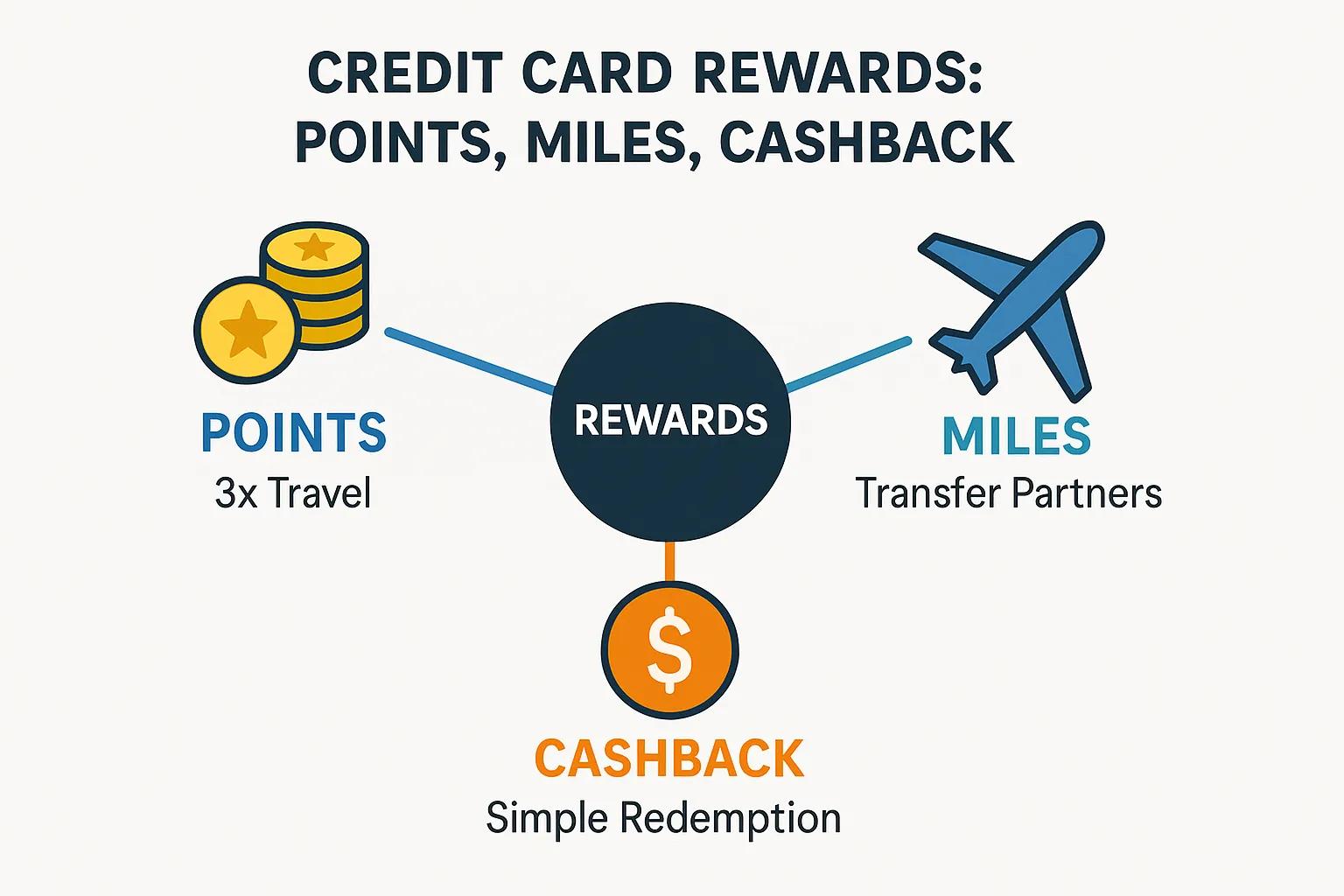
The distinctions between points, miles, and cashback can significantly impact how consumers choose to utilize their credit cards. Points are versatile and can often be redeemed for a wide range of rewards, while miles are specifically designed for travel-related benefits. Cashback, on the other hand, provides a direct monetary return on purchases. Understanding these differences helps consumers select the best rewards program that aligns with their spending habits and financial goals.
Which Are the Best Credit Card Rewards for Travel and Cashback?

Identifying the best credit card rewards for travel and cashback involves comparing various options based on features, benefits, and user preferences.
What Are the Top Travel Rewards Credit Cards in 2024?
In 2024, several travel rewards credit cards stand out for their exceptional benefits. These include cards that offer generous sign-up bonuses, high earning rates on travel-related purchases, and valuable travel perks such as lounge access and no foreign transaction fees. For instance, the XYZ Travel Card offers 3 points per dollar on travel expenses and a substantial sign-up bonus, making it a top choice for frequent travelers.
How to Compare Credit Card Cashback vs Points for Maximum Value?
When comparing cashback and points, it’s essential to evaluate the overall value based on personal spending habits. Cashback cards provide straightforward returns, while points can offer higher value when redeemed for travel. A strategic approach involves calculating the effective value of points based on redemption options and aligning them with your spending patterns to maximize rewards.
Understanding the intrinsic value of rewards is crucial, as academic research delves into how loyalty programs price rewards and calculate the cost per point to ensure attractiveness and optimal redemption strategies.
Loyalty Program Rewards: Pricing & Cost Per Point
Access to attractive rewards is perhaps the most important contributor to the allure of any loyalty currency. Chapter 3 is dedicated to everything to do with awards. How do you price rewards and how do you decide which rewards to include? De Boer and Chin evaluate the pros and cons of different types of rewards. They introduce the important concepts of preferentiality and equivalency, which help to define how attractive a currency is to members and determine the extent to which reward providers are compensated for the products and services they offer to the loyalty program. The authors offer an exploration of how to calculate the cost per point, which is an important input both for the P&L as well as the selling price per point.
Designing an Optimal Currency Redemption Strategy for Your Loyalty Program, E de Boer, 2025
How to Redeem Credit Card Points and Miles Effectively?

Effectively redeeming credit card points and miles requires understanding the various options available and choosing the best strategies to maximize value.
What Are the Best Methods to Redeem Airline Miles?
The best methods to redeem airline miles often include booking flights during promotional periods, using miles for upgrades, or taking advantage of partner airlines. For example, redeeming miles for international flights can yield higher value compared to domestic flights, especially when booking in advance. Additionally, utilizing airline partnerships can enhance redemption options, allowing travelers to access a broader range of destinations.
Academic research provides a conceptual framework for accurately valuing airline miles, helping frequent flyer program members maximize the utility and purchasing power of their mile assets.
Valuing Airline Miles: Maximize Frequent Flyer Program Utility
Frequent flyer programs of airlines have gradually evolved into a multi-billion dollar business over the years. Valuing frequent flyer program miles accurately and fairly has its practical implications both for airlines and members of frequent flyer programs. As a ground-breaking academic study dedicated to airline loyalty programs, this study aims to build a conceptual framework to guide the valuation of miles. Through comparing required miles for different award types with their equivalent cash prices, this study has successfully addressed the purchasing power of AAdvantage miles of American Airlines when they are used for award redemption. Not only can this study be used to assist frequent flyer program members to maximize the utility of their miles assets, it also has the potential of becoming the theoretical foundation to build an industry-wide benchmark for valuing miles.
A conceptual framework for valuating airline frequent flyer program miles, Y Gao, 2020
How Do Points Transfer Partners Enhance Redemption Options?
Points transfer partners significantly enhance redemption options by allowing cardholders to transfer their points to airline loyalty programs. This flexibility can lead to better flight availability and potentially higher value for points. For instance, transferring points to a frequent flyer program can unlock exclusive deals and upgrades, maximizing the overall travel experience.
What Are Important Policies and Perks in Credit Card Rewards Programs?
Understanding the policies and perks associated with credit card rewards programs is vital for making informed decisions.
Do Credit Card Points Expire and How to Prevent It?
Many credit card points do have expiration policies, which can vary by issuer. To prevent points from expiring, cardholders should regularly engage with their rewards programs, such as making purchases or redeeming points. Additionally, some programs offer ways to extend point validity through specific activities, ensuring that rewards remain accessible.
Research further emphasizes the varying policies on point expiration and transferability, which significantly influence the perceived value of loyalty points.
Loyalty Point Redemption: Expiration, Transfers & Value
In practice, different loyalty programs have divergent policies on the expiration dates of points, and how points can be transferred or sold. For example, selling points directly to consumers, making point transfers easier, and allowing points to be used for a wider variety of purchases are all ways that loyalty programs can increase the perceived value of points.
Paying with money or paying with points: How variable versus fixed exchange rates influence loyalty point redemption, SY Chun, 2024
What Travel Perks Should You Look for in Rewards Credit Cards?
When evaluating rewards credit cards, consider looking for travel perks that enhance your overall experience. Key perks may include sign-up bonuses, flexible redemption options, travel insurance benefits, and access to exclusive events or lounges. These features can significantly enhance the value of a credit card beyond just earning points or cashback.
This comparison highlights the diverse options available in the credit card rewards landscape, allowing consumers to choose based on their preferences and spending habits.
To further explore your options, credit cards can be compared based on various factors.
For more information on maximizing your rewards, We Do Points offers a wealth of resources.
Frequently Asked Questions
What factors should I consider when choosing a credit card for rewards?
When selecting a credit card for rewards, consider factors such as your spending habits, the types of rewards offered (points, miles, or cashback), annual fees, and any sign-up bonuses. Additionally, evaluate the earning rates for different categories, such as travel or dining, and check for any foreign transaction fees if you travel internationally. Understanding the redemption options and flexibility of the rewards program is also crucial to ensure it aligns with your lifestyle and financial goals.
Can I combine points from different credit cards?
Combining points from different credit cards depends on the issuer’s policies. Some credit card companies allow you to transfer points between their cards, while others do not. Additionally, if the cards are part of the same rewards program or network, you may be able to pool points for greater redemption options. Always check the terms and conditions of your specific credit cards to understand the possibilities and limitations regarding point transfers.
How can I maximize the value of my credit card rewards?
To maximize the value of your credit card rewards, focus on using your card for purchases in categories that earn the highest points or cashback. Take advantage of sign-up bonuses by meeting the spending requirements early on. Additionally, consider using your points for travel-related redemptions, as they often provide higher value compared to cash or merchandise. Regularly review your rewards program for any promotions or changes that could enhance your earning potential.
What should I do if I have unused points or miles?
If you have unused points or miles, consider redeeming them before they expire. Look for opportunities to use them for travel, upgrades, or even gift cards. Some programs allow you to transfer points to travel partners, which can provide better value. If you’re not planning to travel soon, check if your rewards program offers options to redeem points for merchandise or cashback. Staying engaged with your rewards program can help you avoid losing value on unused points.
Are there any fees associated with credit card rewards programs?
Yes, there can be fees associated with credit card rewards programs. Common fees include annual fees for the credit card itself, foreign transaction fees for purchases made abroad, and late payment fees if you miss a payment. Some rewards programs may also charge fees for redeeming points or transferring them to partner programs. It’s essential to read the terms and conditions of your credit card to understand all potential fees and how they might impact your rewards strategy.
How do I keep track of my credit card points and miles?
To keep track of your credit card points and miles, regularly log into your credit card account online or through the issuer’s mobile app. Most issuers provide a dashboard that displays your current points balance, transaction history, and redemption options. Additionally, consider using budgeting or rewards tracking apps that can help you monitor your spending and rewards accumulation across multiple cards. Setting reminders for expiration dates can also ensure you don’t lose any valuable rewards.
Conclusion
Maximizing credit card points and miles can significantly enhance your travel experiences and financial savings. By understanding the differences between points, miles, and cashback, you can make informed choices that align with your spending habits. Engaging with your rewards program regularly ensures you capitalize on valuable opportunities and avoid losing points. Start exploring your options today to unlock the full potential of your credit card rewards.