Guide to Airline Companion Passes and How to Earn Them

Guide to Airline Companion Passes and How to Earn Them

Airline companion passes are valuable travel perks that allow passengers to bring a companion on flights at a significantly reduced cost or even for free, excluding taxes and fees. These passes are often associated with airline loyalty programs or co-branded credit cards, making them an attractive benefit for frequent travelers. In this comprehensive guide, we will explore the most popular airline companion passes, their benefits, and how to earn them.


What Are Airline Companion Passes?

An airline companion pass is a travel benefit that enables a passenger to book an additional seat for a companion at little to no cost. The specifics of companion passes vary by airline, including eligibility requirements, validity periods, and applicable routes. Some airlines offer them as part of their frequent flyer programs, while others provide them through premium credit card memberships.

Companion passes are a fantastic way to maximize travel rewards, especially for those who travel frequently with a partner or family member. However, earning them typically requires meeting specific spending or flight requirements.


Southwest Airlines Companion Pass

One of the most well-known and valuable airline companion passes is the Southwest Companion Pass. This pass allows the holder to bring a designated companion on any Southwest flight for free (excluding taxes and fees). The pass is valid for the remainder of the year in which it is earned, plus the entire following year, making it one of the longest-lasting companion passes available.

How to Earn the Southwest Companion Pass

To qualify for the Southwest Companion Pass, you must either:

  • Earn 135,000 Rapid Rewards points within a calendar year.
  • Complete 100 qualifying one-way flights within a calendar year.

There are multiple ways to earn Rapid Rewards points that count toward the companion pass:

  • Flying with Southwest – Paid Southwest flights earn qualifying points.
  • Southwest Rapid Rewards Credit Cards – Southwest co-branded credit cards from Chase offer sign-up bonuses and ongoing point-earning opportunities.
  • Partner Activity – Hotel stays, car rentals, and purchases through the Southwest shopping portal can help accumulate qualifying points.

By strategically using credit card bonuses and flight activity, many travelers can earn the Southwest Companion Pass early in the year, maximizing its value.


Delta Air Lines Companion Certificate

Delta offers a Companion Certificate, which allows eligible cardholders to book a round-trip domestic ticket for a companion, only paying taxes and fees (typically as low as $22). This benefit is available to certain Delta SkyMiles American Express cardholders.

How to Earn the Delta Companion Certificate

The Delta Companion Certificate is an annual benefit for cardholders of the following credit cards:

  • Delta SkyMiles® Platinum American Express Card– Provides a Companion Certificate each year upon card renewal.
  • Delta SkyMiles® Reserve American Express Card – Also includes an annual Companion Certificate, which can be used for First Class, Comfort+, or Main Cabin.

These certificates can be particularly valuable when used on higher-priced domestic routes, helping travelers save hundreds of dollars.


American Airlines Companion Certificate

American Airlines offers a Companion Certificate to eligible credit cardholders, allowing them to book a companion ticket at a significantly reduced cost.

How to Earn the American Airlines Companion Certificate

You can earn an American Airlines Companion Certificate through the following co-branded credit cards:

  • AAdvantage® Aviator® Red World Elite Mastercard® – Earn a Companion Certificate after spending $20,000 in a calendar year.
  • Citi® / AAdvantage® Platinum Select® World Elite Mastercard® – Similar eligibility, with a Companion Certificate available after meeting spending requirements.

The Companion Certificate is typically valid for domestic flights within the U.S. and requires a nominal fee (often around $99) plus taxes and fees.


British Airways Travel Together Ticket

British Airways offers the Travel Together Ticket, a companion benefit provided to holders of the British Airways Visa Signature® Card. This pass allows a cardholder to bring a companion on a round-trip award flight originating from the U.S., with the only costs being taxes, fees, and carrier surcharges.

How to Earn the British Airways Travel Together Ticket

To earn a Travel Together Ticket, a cardholder must spend $30,000 on purchases within a calendar year using the British Airways Visa Signature® Card. The ticket is valid for two years from issuance and can be used for any class of service.

While this companion ticket is an excellent benefit, British Airways flights often have high taxes and fees, which can sometimes reduce the value of the pass.


Lufthansa Companion Ticket

Lufthansa provides a Companion Ticket through the Miles & More® World Elite Mastercard®, allowing a cardholder to book a companion ticket for select international destinations.

How to Earn the Lufthansa Companion Ticket

To receive a Lufthansa Companion Ticket, you must hold the Miles & More® World Elite Mastercard® and make at least one purchase per year. The ticket is valid for economy class travel from the U.S. to Europe, Africa, the Middle East, and the Far East.

The primary limitation of the Lufthansa Companion Ticket is that it applies only to certain fare classes, typically excluding lower-priced economy fares.


Pros and Cons of Airline Companion Passes

While airline companion passes offer significant savings, they also come with limitations. Understanding the pros and cons can help travelers maximize their benefits.

Pros:

  • Substantial Cost Savings – Many companion passes offer a second ticket at little to no cost.
  • Long Validity Periods – Some, like Southwest’s, are valid for over a year.
  • Flexibility – Some passes allow changing the designated companion throughout the year.

Cons:

  • High Earning Requirements – Some passes require significant spending or frequent travel.
  • Taxes and Fees – Most companion passes still require paying government-imposed fees.
  • Limited Availability – Some passes have blackout dates or apply only to specific fare classes.

For travelers who frequently fly with a partner, companion passes can be a game-changer in reducing airfare expenses.


Maximizing the Value of Companion Passes

To make the most of airline companion passes, consider the following strategies:

  1. Time Your Earning Period – If possible, earn the pass early in the year to maximize its validity.
  2. Use on High-Value Routes – Companion passes provide the best value on expensive or long-haul flights.
  3. Pair with Other Travel Rewards – Using travel points and miles in conjunction with companion passes can further reduce travel costs.

Additionally, travelers can explore wedopoints.com for more insights on maximizing travel rewards.


Conclusion

Airline companion passes are an incredible way to save money while flying with a companion. Whether through a loyalty program or a premium credit card, these passes can significantly reduce travel costs. By understanding the requirements and strategies for earning them, travelers can unlock substantial savings and enjoy more travel opportunities.

For further guidance on earning and maximizing airline companion passes, visit wedopoints.com and explore expert strategies for travel rewards. companion for a fraction of the cost.


How to Pool Points and Miles with Family Members

How to Pool Points and Miles with Family Members

Pooling points and miles with family members is a strategic approach to maximize travel rewards, enabling families to reach redemption goals more swiftly and enjoy memorable vacations together. By consolidating individual earnings into a collective pool, families can unlock greater value from loyalty programs. This comprehensive guide delves into the benefits of pooling, outlines programs that facilitate family pooling, and provides actionable steps to implement this strategy effectively.

Understanding Points and Miles Pooling

Points and miles pooling involves combining rewards earned by multiple individuals into a single account or allowing shared access for redemptions. This strategy is particularly advantageous for families where individual members may not accumulate sufficient points for significant redemptions on their own. By pooling resources, families can expedite the accumulation of points, leading to quicker access to free flights, hotel stays, or other travel-related benefits.

Benefits of Pooling Points and Miles:

  • Accelerated Redemptions: Combining points allows families to reach redemption thresholds faster than individual accounts would permit.
  • Simplified Management: Centralizing points in one account streamlines tracking and planning for future redemptions.
  • Enhanced Value: Some programs offer better redemption rates or exclusive benefits for pooled points, increasing the overall value.

Airline Loyalty Programs Offering Family Pooling

Several airline loyalty programs recognize the value of family pooling and offer mechanisms to facilitate this. Below are some notable programs:

1. JetBlue TrueBlue

JetBlue’s TrueBlue program allows up to seven friends and family members to pool points for free. The Pool Leader administers the pool and can nominate any member to redeem points. Upon joining the pool, members decide how many of their points they’d like to contribute, and all future points earned are automatically added to the pool. (NerdWallet)

2. United Airlines MileagePlus

United Airlines allows MileagePlus members to pool their miles with friends and family for free. A pool leader can invite up to four other members, and pooled miles can be redeemed for United or United Express flights. (NerdWallet)

3. British Airways Executive Club

British Airways offers a Household Account option, permitting up to seven members residing at the same address to pool their Avios. Additionally, the Family and Friends list allows redemption for up to five individuals outside the household. (The Points Guy)

4. Air Canada Aeroplan

Air Canada’s Aeroplan program allows up to eight members to participate in family sharing. All members’ points are added to the pool, and redemptions are split proportionally from each member. (NerdWallet)


Hotel Loyalty Programs with Pooling Options

1. Hilton Honors

Hilton Honors Points Pooling allows up to 11 people to combine their points for free. One member initiates the pool and invites up to 10 others. (NerdWallet)

2. Marriott Bonvoy

Marriott Bonvoy members can transfer up to 100,000 points per year to another member for free, with a maximum of 500,000 points received annually. (NerdWallet)

3. World of Hyatt

Hyatt allows members to combine points for free to facilitate award redemptions. Transfers can occur once every 30 days. (NerdWallet)


Credit Card Reward Programs and Pooling

1. Chase Ultimate Rewards

Chase allows cardholders to transfer Ultimate Rewards points between their own accounts or to a member of their household who also holds a Chase credit card. (NerdWallet)

2. American Express Membership Rewards

American Express does not permit direct transfer of Membership Rewards points between accounts. However, if you have an authorized user on your Amex Membership Rewards-earning card, you can transfer your points to their frequent flyer accounts. (The Points Guy)

3. Capital One Miles

Capital One allows cardholders to transfer miles to another Capital One miles-earning cardholder. (The Points Guy)


Implementing a Successful Pooling Strategy

1. Identify Eligible Programs

Review the loyalty programs you and your family members participate in and determine which offer pooling or point transfers.

2. Assign a Pool Leader

For programs requiring a designated leader, choose a responsible family member to manage redemptions and ensure points are used effectively.

3. Set Goals for Redemptions

Establish collective travel goals to determine the best use of pooled points. Whether it’s a free flight, luxury hotel stay, or an upgrade, having a shared goal ensures points are used efficiently.

4. Monitor Expiry Dates

Different programs have varying expiration policies. Make sure to track expiry dates to avoid losing valuable points.

5. Leverage Credit Cards for Maximum Earning

If multiple family members have credit cards that earn transferable points, strategize spending to maximize rewards. Some premium travel cards offer bonus multipliers in categories like dining, groceries, and travel, which can accelerate point accumulation.

6. Use Online Tools and Apps

Use apps like AwardWallet to track your family’s pooled balances and ensure optimal redemption strategies.


Final Thoughts

Pooling points and miles with family members is an excellent way to maximize travel rewards and create memorable experiences. By leveraging the right loyalty programs and implementing a structured approach, families can reach their travel goals faster. Whether pooling airline miles, hotel points, or credit card rewards, a coordinated strategy ensures the best possible redemptions.

For more expert travel rewards advice, visit WeDoPoints, where you’ll find additional tips on maximizing your points and miles.

How to Earn Points Without Traveling

How to Earn Points Without Traveling

In today’s world, accumulating travel rewards isn’t limited to frequent flyers or globetrotters. Even if you don’t travel often, there are numerous strategies to earn valuable points and miles. By leveraging everyday activities and financial tools, you can build a substantial rewards balance without setting foot on a plane. Here’s how to earn points without traveling:

1. Leverage Credit Card Sign-Up Bonuses

One of the most effective ways to earn a significant number of points quickly is through credit card sign-up bonuses. Many credit cards offer substantial bonuses when you meet a minimum spending requirement within the first few months. For instance, the Chase Sapphire Preferred® Card offers a generous bonus after you spend a certain amount on purchases in the first three months from account opening. It’s essential to align these spending requirements with your regular expenses to avoid unnecessary debt. Timing your application around major purchases can help you meet these thresholds more comfortably.

NerdWallet

2. Maximize Everyday Spending with Rewards Credit Cards

Utilizing rewards credit cards for your daily expenses is a straightforward way to accumulate points. Cards like the Capital One Venture Rewards Credit Card offer a flat rate of miles per dollar spent on all purchases, making it easy to earn rewards without adjusting your spending habits. By charging routine expenses—such as groceries, utilities, and dining out—to a rewards card, you can steadily build your points balance. Just ensure you pay off your balance in full each month to avoid interest charges.

The Points Guy

3. Utilize Online Shopping Portals

Many airlines and credit card issuers have online shopping portals that reward you with bonus points for shopping with affiliated retailers. By accessing your favorite stores through these portals, you can earn additional points on purchases you were planning to make anyway. For example, the AAdvantage eShopping portal allows you to earn American Airlines miles when shopping online at participating merchants. This strategy effectively turns your online shopping into a points-earning opportunity.

The Points Guy

4. Participate in Dining Rewards Programs

Dining rewards programs offer another avenue to earn points without traveling. By registering your credit or debit cards with programs like AAdvantage Dining or Delta SkyMiles Dining, you can earn miles when you dine at participating restaurants. The process is simple: sign up for the program, register your cards, and use them to pay at eligible eateries. You’ll earn points automatically, adding value to your regular dining experiences.

NerdWallet

5. Engage with Financial Products Offering Points

Some financial institutions offer points or miles as incentives for opening new accounts or maintaining certain balances. For instance, Bask Bank provides AAdvantage miles instead of traditional interest on savings accounts. By depositing funds into such accounts, you can passively earn miles over time. Additionally, some banks run promotions where you can earn points for opening checking or savings accounts, though these offers often come with specific requirements and potential tax implications.

The Points Guy

6. Take Advantage of Referral Bonuses

Many credit card issuers offer referral bonuses when you refer friends or family members who are approved for a card. Sharing your referral link can earn you bonus points, sometimes amounting to thousands of miles. This method allows you to boost your points balance by simply encouraging others to take advantage of the same rewards opportunities you enjoy. Ensure that the referred individuals understand the card’s terms and benefits to make informed decisions.

NerdWallet

7. Pay Bills with Rewards Credit Cards

Whenever possible, use your rewards credit card to pay for recurring bills such as utilities, streaming services, and insurance premiums. While some service providers may charge a fee for credit card payments, many do not. By directing these expenses through a rewards card, you can earn points on payments you need to make regardless, effectively turning necessary expenses into opportunities for earning points without traveling.

8. Engage in Surveys and Market Research

Several airlines and rewards programs partner with survey companies, allowing you to earn miles in exchange for your opinions. Platforms like e-Rewards and Miles for Opinions offer points or miles for completing surveys. While this method won’t yield a massive number of points quickly, it’s an easy way to supplement your earnings during your spare time. Be mindful of the time investment relative to the rewards earned to ensure it’s a worthwhile endeavor.

The Points Guy

9. Utilize Cashback and Rewards Apps

Cashback apps and browser extensions like Rakuten (formerly Ebates) offer opportunities to earn cashback on your purchases, which can be converted into points with certain programs. For example, Rakuten allows users to earn Membership Rewards points instead of cashback when shopping through their portal with a linked American Express card. This approach enables you to earn points on top of the rewards from your credit card, maximizing your earnings without additional spending.

The Points Guy

10. Purchase Gift Cards for Regular Expenses

Buying gift cards to retailers you frequently shop at can be a strategic way to earn points. Some rewards programs and shopping portals offer bonus points for purchasing gift cards to specific stores. By buying these gift cards through the appropriate channels and using them for your regular shopping, you can earn additional points without increasing your spending. Ensure that the retailers are ones you regularly patronize to avoid tying up funds in unused gift cards.

Adelaide Now

11. Monitor Special Promotions and Limited-Time Offers

Rewards programs frequently run promotions that offer bonus points for specific actions, such as shopping at particular retailers, dining at certain restaurants, or using your card for specific categories of spending. Keeping an eye on these promotions and aligning them with your planned spending can lead to significant bonus points. Subscribing to newsletters or regularly checking the websites of your preferred rewards programs can help you stay informed about these opportunities.

For example, Chase’s Ultimate Rewards program often runs limited-time promotions where you can earn extra points at select merchants. Similarly, American Express sometimes offers Amex Offers, allowing you to earn bonus Membership Rewards points or statement credits when spending at specific brands. These promotions are a great way to boost your earnings while making purchases you would have made anyway.

(bankrate.com)


Final Thoughts on How to Earn Points Without Traveling

Accumulating travel rewards isn’t exclusive to frequent flyers. By leveraging strategic credit card spending, online shopping portals, dining rewards, and various promotions, you can earn valuable points without leaving your home. Understanding how to maximize these opportunities allows you to build a significant points balance and unlock future travel benefits.

Whether you’re saving for a dream vacation or looking to redeem points for other rewards, the methods outlined here will help you earn points without traveling while maintaining your regular spending habits.

For more in-depth strategies and expert advice, check out The Points Guy, NerdWallet, and Bankrate. If you’re looking for more ways to optimize your points strategy, visit We Do Points for additional insights and earning techniques.

By staying informed and using these strategies, you can make the most of your rewards programs—no travel required!

Accumulating rewards points doesn’t require frequent travel; strategic use of certain credit cards can help you amass points through everyday spending.

Here are five top credit cards to consider:

1. Capital One Venture Rewards Credit Card

  • Rewards Rate: Earn 2 miles per dollar on every purchase, making it simple to accumulate travel rewards without tracking specific categories.
  • Annual Fee: $95.
  • Additional Benefits: No foreign transaction fees and flexible redemption options for travel-related expenses.

This card is ideal for those seeking straightforward rewards on all purchases.

The Points Guy

2. Chase Freedom Unlimited®

  • Rewards Rate: Earn 5% cash back on travel purchased through Chase Ultimate Rewards®, 3% on dining and drugstore purchases, and 1.5% on all other purchases.
  • Annual Fee: $0.
  • Additional Benefits: Access to Chase’s Ultimate Rewards® program, offering flexible redemption options including cash back, gift cards, and travel.

This card offers a high rewards rate on everyday spending categories without an annual fee.

NerdWallet

3. Wells Fargo Autograph® Card

  • Rewards Rate: Earn 3 points per dollar on dining, travel, gas stations, transit, popular streaming services, and phone plans; 1 point per dollar on other purchases.
  • Annual Fee: $0.
  • Additional Benefits: Cell phone protection and access to Visa Signature® Concierge services.

This card is suitable for those looking to maximize rewards across a variety of everyday spending categories.

Credit Karma

4. Citi® Double Cash Card

  • Rewards Rate: Earn 2% cash back on all purchases: 1% when you buy and an additional 1% as you pay off those purchases.
  • Annual Fee: $0.
  • Additional Benefits: No caps on cash back earned and no category restrictions.

This card is ideal for those seeking a straightforward, high flat-rate cash back on all purchases.

Credit Karma

5. Blue Cash Preferred® Card from American Express

  • Rewards Rate: Earn 6% cash back at U.S. supermarkets (on up to $6,000 per year in purchases, then 1%), 6% on select U.S. streaming subscriptions, 3% at U.S. gas stations and on transit, and 1% on other purchases.
  • Annual Fee: $0 intro annual fee for the first year, then $95.
  • Additional Benefits: Access to Amex Offers for shopping, dining, and entertainment.

This card is beneficial for those with significant spending on groceries and streaming services.

NerdWallet

By selecting a card that aligns with your spending habits, you can effectively earn points without traveling, turning everyday purchases into valuable rewards.

Understanding Dynamic Award Pricing in Airline Programs

Understanding Dynamic Award Pricing in Airline Programs

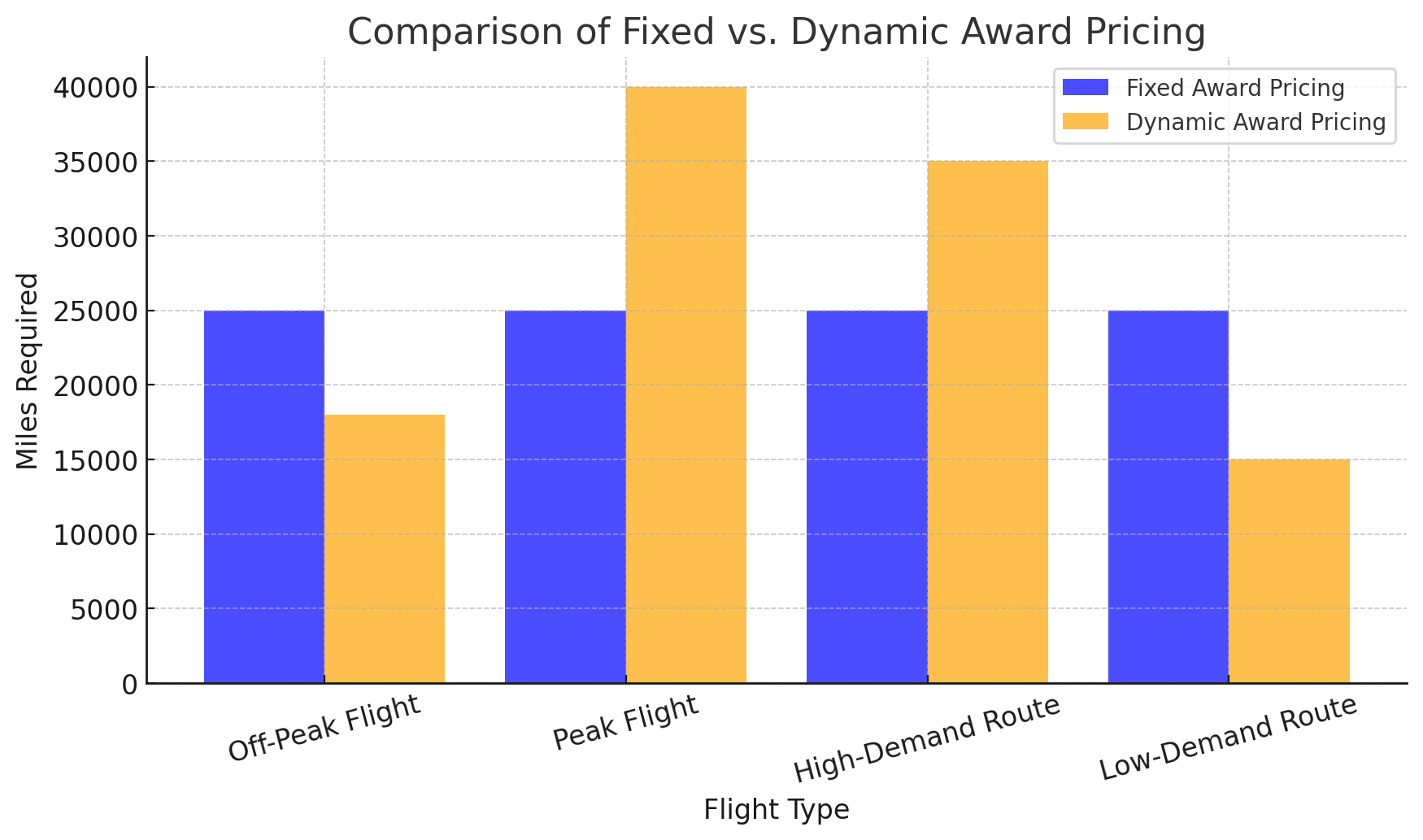
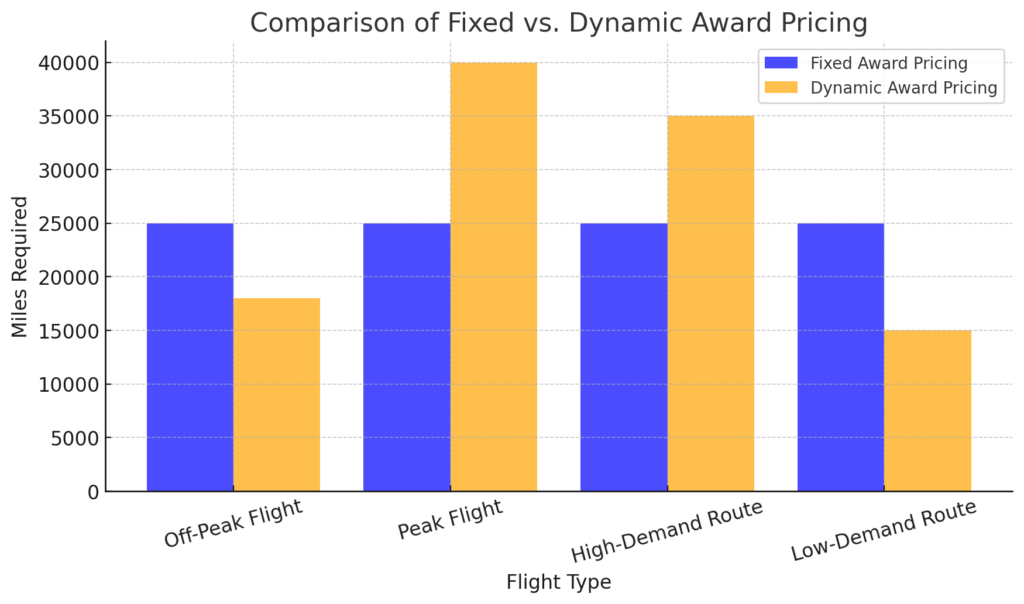
See Above a bar chart comparing fixed award pricing with dynamic award pricing for different flight scenarios. This visualization highlights how dynamic pricing fluctuates based on demand, while fixed pricing remains constant.

Introduction

The landscape of airline loyalty programs has undergone significant transformations in recent years, primarily due to the adoption of dynamic award pricing models. This shift has redefined how travelers earn and redeem miles, introducing both opportunities and challenges. Understanding dynamic award pricing is essential for maximizing the value of your miles and navigating the evolving world of air travel rewards.

What Is Dynamic Award Pricing?

Dynamic award pricing is a model where the number of miles or points required for an award ticket fluctuates based on various factors, including demand, route popularity, seasonality, and even the cash price of the ticket. Unlike traditional fixed award charts, which offer set mileage requirements for specific routes, dynamic pricing adjusts in real-time, mirroring the volatility of market conditions.

For example, during peak travel periods or on high-demand routes, the miles required for a ticket may increase substantially. Conversely, during off-peak times or on less popular routes, travelers might find award tickets for fewer miles than previously required. This approach allows airlines to manage their inventory more efficiently and align award seat availability with actual market demand.

The Shift from Fixed Award Charts to Dynamic Pricing

Historically, airlines utilized fixed award charts, providing travelers with predictable mileage requirements for award bookings. These charts allowed frequent flyers to plan and save for trips with a clear understanding of the miles needed. However, as the aviation industry evolved, airlines sought more flexible and revenue-responsive models.

The transition to dynamic award pricing gained momentum as airlines recognized the potential to optimize revenue and manage seat inventory more effectively. By tying award prices to factors like demand and fare prices, airlines can ensure that award redemptions align more closely with their financial objectives.

Several major airlines have embraced dynamic award pricing:

  • Delta Air Lines SkyMiles: Delta was among the pioneers, removing its fixed award charts and adopting a fully dynamic model.
  • United Airlines MileagePlus: United followed suit, introducing dynamic pricing for its award tickets, leading to variability in mileage requirements.
  • American Airlines AAdvantage: While American Airlines has implemented dynamic pricing for its own flights, partner awards often still adhere to fixed charts.
  • Air France-KLM Flying Blue: This program employs dynamic pricing, with mileage requirements fluctuating based on various factors.

The move towards dynamic pricing reflects a broader industry trend, as airlines aim to enhance profitability and offer more flexible redemption options to their customers.

Implications for Travelers

The adoption of dynamic award pricing carries several implications for travelers:

Increased Complexity in Planning

With fluctuating mileage requirements, travelers may find it challenging to anticipate the number of miles needed for future trips. This unpredictability can complicate long-term travel planning and saving strategies.

Potential for Both Higher and Lower Redemptions

Dynamic pricing can lead to higher mileage requirements during peak periods or for popular routes. Conversely, it may offer opportunities for reduced mileage redemptions during off-peak times or on less frequented routes. Savvy travelers who are flexible with their travel dates and destinations can capitalize on these lower redemption rates.

Enhanced Availability of Award Seats

By aligning award prices with demand, airlines may increase the availability of award seats. While the mileage cost may be higher during peak times, the chances of finding an available award seat could improve, offering more options for travelers willing to spend the additional miles.

Strategies to Navigate Dynamic Award Pricing

To make the most of dynamic award pricing, travelers can employ several strategies:

Flexibility Is Key

Being open to various travel dates, times, and destinations can help you take advantage of lower mileage requirements. Traveling during off-peak periods or choosing less popular routes can result in significant mileage savings.

Monitor Award Rates Regularly

Award prices can change frequently. Regularly checking award rates allows you to identify and seize favorable redemption opportunities as they arise.

Leverage Airline Partnerships

Some airlines maintain fixed award charts for partner redemptions. For instance, while American Airlines uses dynamic pricing for its own flights, partner awards may still follow fixed charts, potentially offering better value. Exploring partner airline options can lead to more predictable and sometimes lower mileage requirements.

Utilize Transferable Point Programs

Flexible point currencies, such as those from major credit card programs, can be transferred to various airline partners. This flexibility allows you to choose the most advantageous redemption options across multiple programs, especially when some airlines offer better rates or availability.

Stay Informed About Program Changes

Airline loyalty programs periodically update their policies and award structures. Staying informed about these changes ensures you can adapt your strategies and make informed decisions about when and how to redeem your miles.

Recent Developments in Dynamic Award Pricing

The landscape of dynamic award pricing continues to evolve, with several notable developments:

Virgin Atlantic’s Transition to Dynamic Pricing

On October 30, 2024, Virgin Atlantic’s Flying Club loyalty program shifted from fixed award charts to dynamic award pricing for flights operated by the airline. This change means that the number of points required for a flight now varies based on factors such as demand and seasonality. While this offers more flexibility and potential for increased award availability, it also introduces uncertainty in point requirements. Travelers may find some flights requiring fewer points, especially during off-peak times, while popular routes during peak periods could see higher point requirements. (NerdWallet)

Air Canada’s Aeroplan Adjustments

In February 2025, Air Canada announced changes to its Aeroplan program, implementing dynamic pricing for award tickets on select partner airlines, including United Airlines and Emirates. Effective March 25, 2025, the number of points required for flights with these partners will vary based on factors like demand and route popularity. This shift aims to provide greater availability of reward seats but also means that travelers may experience variability in point requirements, especially during high-demand travel periods. (Bankrate)

Insights from The Points Guy

The Points Guy has extensively analyzed dynamic award pricing, emphasizing the need for travelers to adapt their strategies in response to these changes. Their research suggests that while dynamic pricing can lead to higher redemption rates in some cases, it can also create opportunities for lower-cost redemptions when planned strategically. (The Points Guy)

Conclusion

Dynamic award pricing has transformed airline loyalty programs, offering both challenges and opportunities for travelers. While it introduces variability and unpredictability, understanding how to navigate this system can help travelers maximize their miles and secure valuable redemptions. By remaining flexible, monitoring award rates, leveraging partnerships, and utilizing transferable points, travelers can adapt to the evolving landscape of airline rewards programs.

For further insights into maximizing travel rewards, visit We Do Points.

The Ultimate Guide to Airline Loyalty Programs

In the competitive world of air travel, airline loyalty programs have become a key differentiator for travelers looking to maximize the value of their miles. Whether you’re a frequent flyer or someone planning a few trips a year, understanding the ins and outs of these programs can help you make the most of your travel experience. In this guide, we’ll dive deep into the loyalty programs of four major U.S. airlines: Delta Air Lines, United Airlines, American Airlines, and Southwest Airlines. We’ll explore the structure of each program, the benefits offered, and tips on how to maximize your rewards.

1. Delta SkyMiles

Overview

Delta’s SkyMiles program is one of the most well-known airline loyalty programs, offering a range of benefits to both occasional travelers and frequent flyers. Unlike some other programs, Delta SkyMiles never expire, making it a flexible option for travelers who may not fly regularly.

Earning Miles

SkyMiles can be earned in a variety of ways, including flying with Delta or its partner airlines, booking hotels, renting cars, and even dining out at select restaurants. Delta offers miles based on the fare class and distance flown, with additional bonuses for elite members.

Elite Status: Medallion Program

Delta’s Medallion program is divided into four tiers: Silver, Gold, Platinum, and Diamond. Achieving these tiers requires a combination of Medallion Qualification Miles (MQMs), Medallion Qualification Segments (MQSs), and Medallion Qualification Dollars (MQDs). Each tier offers increasing benefits such as complimentary upgrades, priority boarding, waived fees, and access to Delta Sky Club lounges.

Redeeming Miles

SkyMiles can be redeemed for flights, seat upgrades, hotel stays, car rentals, and even exclusive experiences. Delta also offers a feature called “Pay with Miles,” which allows members to use miles to reduce the cash cost of a ticket. However, it’s worth noting that Delta does not publish an award chart, so the number of miles required for a flight can vary widely based on demand and availability.

Tips for Maximizing SkyMiles

  • Focus on MQMs: If you’re aiming for Medallion status, concentrate on earning MQMs, as they are the primary metric for reaching elite tiers.
  • Partner Flights: Leverage Delta’s extensive network of partner airlines to earn miles and MQMs on flights that aren’t operated by Delta.
  • Use SkyMiles Deals: Regularly check Delta’s SkyMiles Deals, which offer discounted award flights to select destinations.

2. United MileagePlus

white united airlines plane
Photo by Pascal Borener on Pexels.com

Overview

United Airlines’ MileagePlus program is another robust option for frequent travelers, with a broad range of earning and redemption opportunities. United is a member of the Star Alliance network, which includes 26 airlines, allowing MileagePlus members to earn and redeem miles across a wide range of carriers.

Earning Miles

MileagePlus miles can be earned through United flights, Star Alliance partner flights, and purchases with the United credit card. United awards miles based on the fare and class of service, with elite members earning additional bonuses. Non-flight activities, such as hotel stays, car rentals, and shopping through United’s online portal, also contribute to your mileage balance.

Elite Status: Premier Program

The Premier program has four tiers: Silver, Gold, Platinum, and 1K. To qualify, members need to meet requirements for Premier Qualifying Flights (PQFs) and Premier Qualifying Points (PQPs). Benefits include priority boarding, complimentary upgrades, access to United Club lounges, and expanded award availability.

Redeeming Miles

MileagePlus miles can be redeemed for flights, upgrades, hotel stays, car rentals, and merchandise. United offers a dynamic award pricing model, meaning the number of miles required for a flight varies based on demand. United’s Excursionist Perk allows members to add a free one-way segment to a round-trip award ticket, which can be a valuable tool for maximizing your miles.

Tips for Maximizing MileagePlus

  • Use the United Credit Card: The United credit card offers a generous sign-up bonus and ongoing earning potential, especially on United purchases.
  • Strategic Partner Flights: Leverage United’s Star Alliance partners to earn miles and find award availability when United flights are limited.
  • Take Advantage of PQP Boosts: Premier members can earn extra PQPs through credit card spending, making it easier to achieve or maintain elite status.

3. American Airlines AAdvantage

Overview

American Airlines’ AAdvantage program is one of the oldest airline loyalty programs, offering extensive earning and redemption options. As a member of the Oneworld alliance, AAdvantage provides opportunities to earn and redeem miles on 13 partner airlines.

Earning Miles

AAdvantage members earn miles based on the fare paid, with bonuses for higher fare classes and elite status members. Miles can also be earned through credit card spending, hotel stays, car rentals, and shopping through the AAdvantage eShopping portal.

Elite Status: AAdvantage Program

AAdvantage has four elite tiers: Gold, Platinum, Platinum Pro, and Executive Platinum. Members qualify based on Elite Qualifying Miles (EQMs), Elite Qualifying Segments (EQSs), and Elite Qualifying Dollars (EQDs). Elite members enjoy benefits such as priority boarding, complimentary upgrades, and access to Admirals Club lounges.

Redeeming Miles

AAdvantage miles can be redeemed for flights, upgrades, car rentals, hotel stays, and other experiences. American Airlines maintains an award chart, which provides a clear guide to how many miles are needed for different routes and classes of service. The program also offers Web Specials, which are discounted award flights available to members.

Tips for Maximizing AAdvantage

  • Plan Around Web Specials: Regularly check for Web Specials, which can offer significant savings on award flights.
  • Leverage Oneworld Partners: Utilize Oneworld partner airlines to earn and redeem miles, particularly when American Airlines flights are not available.
  • Consider Credit Card Spending: The AAdvantage credit cards offer EQD waivers, which can help you achieve elite status even if you don’t fly frequently.

4. Southwest Airlines Rapid Rewards

Overview

Southwest Airlines’ Rapid Rewards program stands out for its simplicity and transparency. Unlike other programs, there are no blackout dates, and the number of points needed for a flight is directly tied to the fare price. This makes it an attractive option for travelers who value flexibility.

Earning Points

Rapid Rewards points are earned based on the amount spent on Southwest flights, with bonus points for higher fare classes and credit card spending. Points can also be earned through hotel stays, car rentals, and shopping with partners.

Elite Status: A-List and A-List Preferred

Southwest’s elite status is divided into two tiers: A-List and A-List Preferred. Members qualify based on the number of qualifying flights or points earned in a calendar year. Benefits include priority boarding, free same-day standby, and bonus points on flights.

Redeeming Points

Rapid Rewards points can be redeemed for flights, hotel stays, car rentals, and other experiences. One of the most popular features of the program is the Companion Pass, which allows a designated companion to fly with you for free (excluding taxes and fees) whenever you purchase or redeem points for a flight.

Tips for Maximizing Rapid Rewards

  • Earn the Companion Pass: If you fly frequently with a companion, earning the Companion Pass should be a top priority, as it can double the value of your points.
  • Book Early: Southwest’s points redemption is tied to the cash price of tickets, so booking early can often result in significant savings.
  • Utilize Credit Card Bonuses: The Southwest credit cards offer large sign-up bonuses that can help you quickly accumulate points and work towards elite status or the Companion Pass.

Conclusion

Airline loyalty programs can be incredibly rewarding for travelers who know how to navigate them. Whether you’re loyal to Delta, United, American, or Southwest, each program offers unique benefits that can enhance your travel experience. By understanding how to earn and redeem miles or points, and by strategically working towards elite status, you can maximize the value of your travel and make the most of your time in the air.

No matter which airline you choose, staying informed and proactive about your loyalty program can unlock a world of travel opportunities. So, start planning your next adventure and see how far your miles can take you!